Well, that was certainly something.
For starters, can we just move Election Day to the weekend? Making Gen Xers stay up to the wee hours on a Tuesday in business-heavy Q4 fogs up the whole week.
Anyway, I get asked for election predictions more often than the average bear, on account of what people think I do for a living. They obviously haven’t seen/read/heard me on my soapbox ranting about why we don’t — and nobody should — do horse race polling. We’ll never know how many people didn’t vote this week because they were told the outcome was fait accompli. It’s objectively bad for democracy.
That’s not to say I didn’t have my inklings, like most people. Political polls and prediction markets are directionally accurate enough to deserve credence, especially when the spreads are big. Still, none of them — neither the most optimistic nor pessimistic pundit — anticipated the full extent of the carnage we saw.
Things started to feel different to me when Nielsen reported that Fox News’ ratings declined in October by over 27% compared to the same period in 2025 — a non-election year — while Fox’s left-leaning counterparts saw ratings improve. It meant that a big part of the electorate was tuning out, either from fatigue, apathy, resignation, or even a shift in allegiance. That was a bigger indicator than anything I saw from Nate Silver or Kalshi.
Then, of course, there was our own data. We showed you a month ago that Americans were literally the unhappiest they had been in at least 14 years. While we acknowledged it was likely a bellwether of the coming midterms, it may have meant more than we realized. We’ll pay closer attention to those numbers going forward.
Time will tell if or when our collective happiness rebounds. Moments like these tend to have countervailing effects among partisans. It also seems, perhaps unlike any election in our lifetime, that Tuesday was more about people voting against something than voting for something else. It means the people in the middle who swung the pendulum probably aren’t doing cartwheels.
A sustained boost in collective happiness will take more than a gridlocked government will likely deliver. All we can do is watch and wait, now that our civic duties have been dispatched.
In the meantime, yet another election surprised us all, if not in direction, then in magnitude. Our country is simply too big, too complex, and too capricious to fully understand, let alone predict.
I love that about us.
It would be so boring otherwise.
Here’s what we’re seeing:
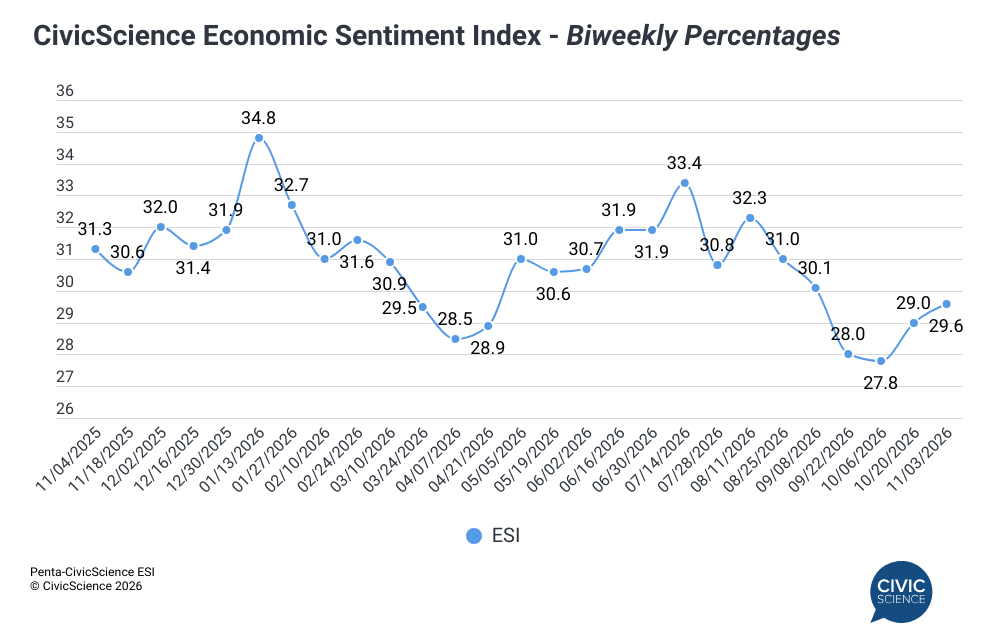
Consumer confidence improved in the days leading up to the election. Our Economic Sentiment Index made its second consecutive upward move over the past two weeks, with all five core metrics improving. Optimism for the longer-term U.S. economy drove the largest share of the gains. Why? I’m not sure. There were a lot of mixed signals during the period, from a rosy Q3 GDP report on the good side to another bad inflation report and shaky stock market movements on the bad side. It’s also possible that people read the tea leaves and felt that change might be coming.
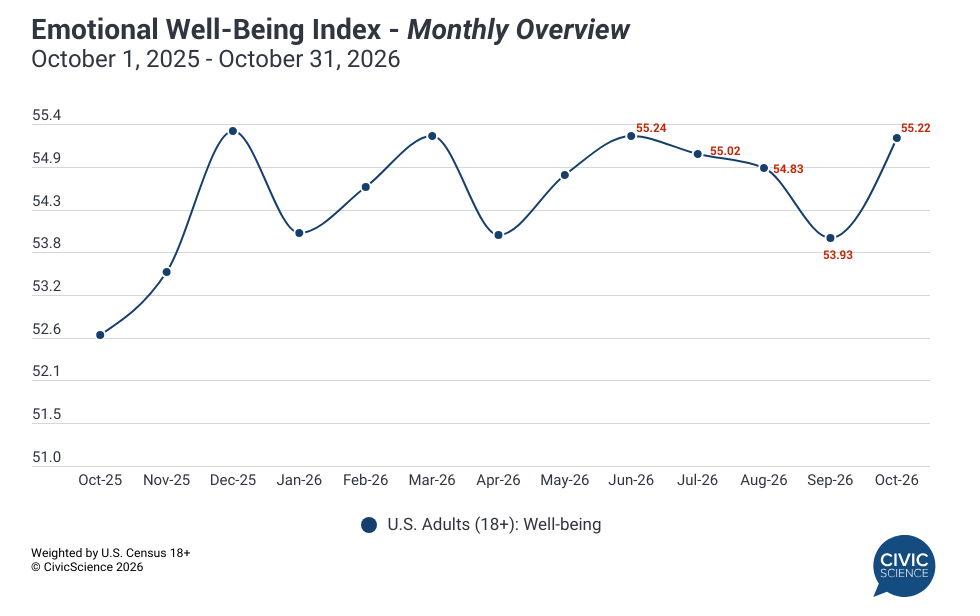
Beyond the economy, our collective mood improved considerably in October. This one is really counterintuitive, given Tuesday’s outcome. Our Emotional Well-Being Index jumped nearly two full points last month, following three consecutive downward months. While feelings of happiness and excitement were flat, the index tilted on declining feelings of fear, stress, and worry. Maybe the greatest October weather in the history of Octobers had something to do with it. The upshot landed us way ahead of where we were this time last year.
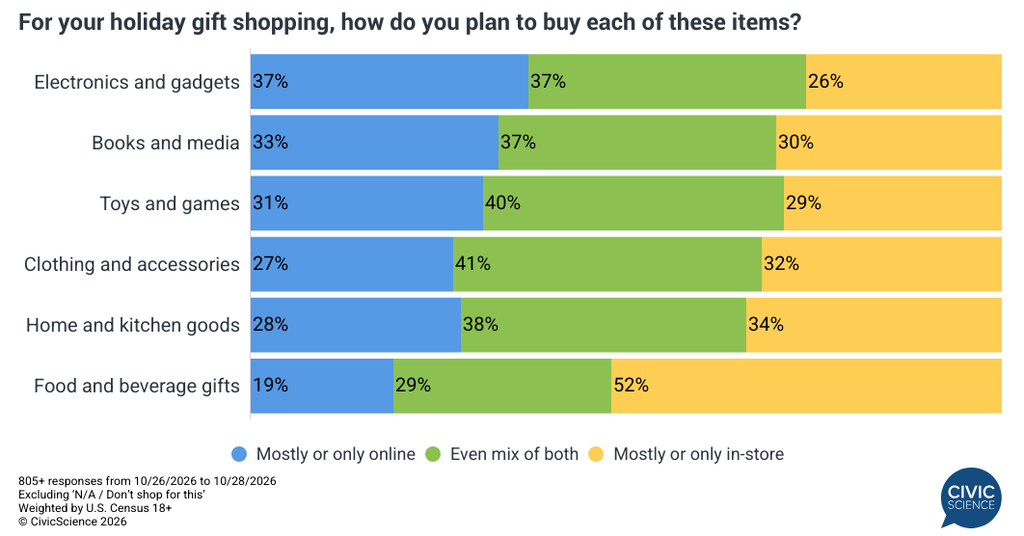
More young adults are weathering the economy by living with their parents. In our 3 Things to Know this week, we studied the fast-growing share of Gen Z and young Millennial adults who are still (or back) living at home with mom and dad. Clearly (and obviously), it’s having a positive effect on their finances — they’re far less likely to be cutting back on their personal spending, while much more optimistic than average homeowners that their financial circumstances will improve. We also looked at the economic issues that were weighing most on voters before Election Day and how holiday shoppers plan to split their time between in-store and online buying.
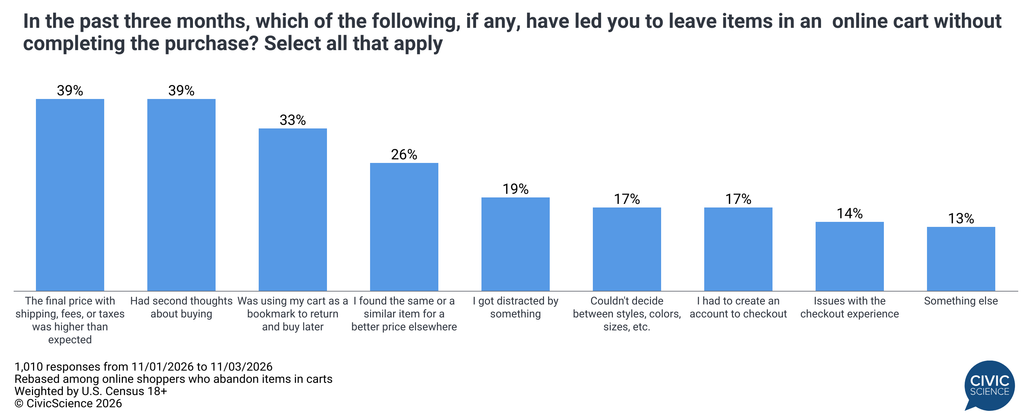
A huge number of people abandon their online shopping cart before making a purchase, for a lot of different reasons. I can’t say I’ve never done this, but I can probably count on one hand the times I’ve gone to the trouble of picking items to buy, only to bail at the last minute. So, I was surprised to learn that nearly one-third of online shoppers abandon carts ‘very’ often. They skew younger, of course, but even 32% of my fellow Xers are in that club. Many people bow out because of the total price and fees they see at checkout, but just as many people merely have second thoughts.
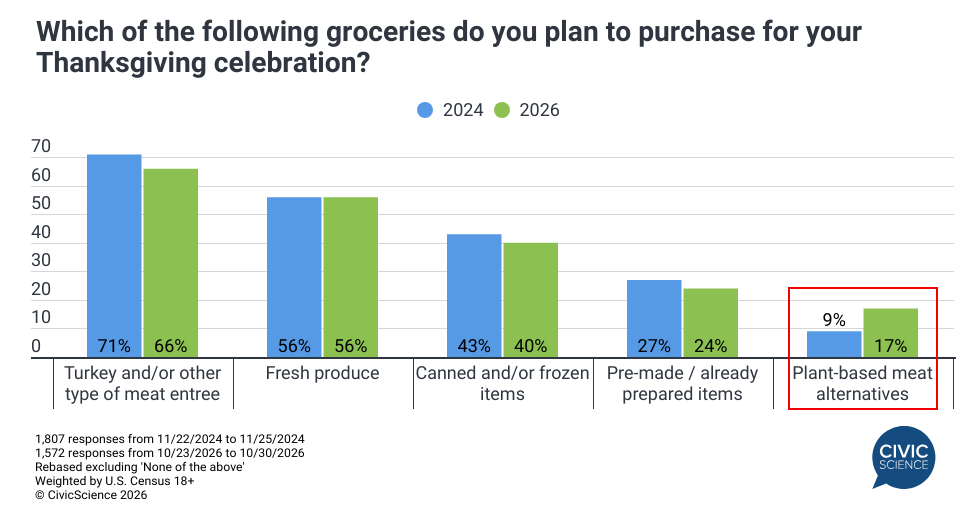
Even during a divisive political season, Americans agree on Thanksgiving. With Tuesday behind us, we can finally turn our attention to the best holiday of the year. 82% of U.S. adults plan to celebrate Thanksgiving, with self-identified Republicans and Democrats equally likely to eat with their immediate family or a small group. Independents are the most likely to travel for the holiday. In our list of six pre-Thanksgiving insights, we also found that vegetarian/vegan entrees are making a small dent in turkey consumption (boo!), take-out plans are on the rise, and political talk is likely to make its way back to the dinner table.
The most popular questions this week:
How busy is your November social calendar?
How do you usually dispose of your pumpkins after Halloween?
Do you notice any changes in your mental well-being when the seasons change?
Do you believe aliens have visited Earth?
Would you ever want to live on a cruise ship for an extended period of time?
Answer Key: Very; Throw them in the woods; For sure, especially spring; Yeah, probably at some point; I don’t want to spend five minutes on a cruise ship.
Hoping you’re well.
JD