Who will make it stop?
Of all the ugly trends plaguing our public discourse over the last decade – rampant tribalism, nastiness on social media, deteriorating trust in professional media and science, online videos turning people into experts on everything from economics to epidemiology, and many more – one thing bothers me over all others.
So-called “whataboutism” has created a self-propagating and seemingly interminable loop of socio-political depravity across the spectrum. Every negative action can be justified if the other side did it first or worse. The moral high ground is underwater, sinking like a rock.
The problem is exacerbated when two sides have been led to believe they are in an existential battle over the future of the country. No punch is too low, no shot too cheap, when the soul and survival of our nation is allegedly at stake (side note: it’s really not).
The ongoing gerrymandering sweepstakes are a perfect example. Politically driven congressional redistricting is one of the most universally unpopular evils you can find. Anyone with half a brain knows it’s a scourge on democracy, creating less optionality (among voters) and more polarization (among candidates). Nonetheless, a new one seems to happen every week.
Democrats will argue they’ve opposed gerrymandering for years, evidenced by laws they’ve proposed to ban it (albeit with lots of unrelated provisions bolted on). Yet, those same Democrats eagerly celebrated Virginia voters approving a redistricting referendum this week – a retaliation to Republican-led efforts in Texas and elsewhere. Principle vanishes when the other side is doing it too.
The weaponization of our justice system is another, more complicated example. We can set our watches nowadays to the party in power, using legal and legislative instruments to go after their foes. One might look at what they see as corruption in the current administration and salivate at the prospects of comeuppance the next time Democrats retake the reins. It overlooks the likelihood that President Trump will issue a wide swath of preemptive pardons to everyone in his extended orbit. Why not? Biden did it.
Wash, rinse, repeat.
The question is whether either side has the courage to break the cycle. Refusing to play dirty on moral grounds will be lamented as weak among most partisans. I would argue the opposite is true. But I’m only one voter.
Perhaps a large group of leaders in the middle – bipartisan or entirely independent – will join forces in stopping the madness. Most days, that feels like the least plausible outcome of all.
I don’t know who or what will make things change.
But it can’t go on like this forever.
Here’s what we’re seeing:
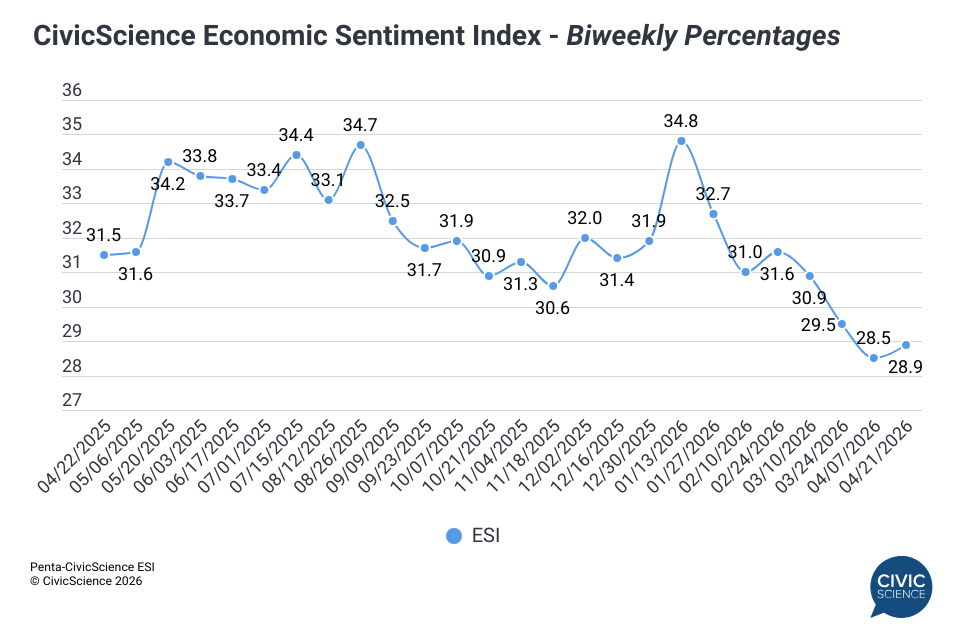
Consumer confidence appears to have cauterized for now. Our Economic Sentiment Index had its first uptick since mid-February, as the rickety cease-fire in Iran calmed collective nerves (and gas prices). Improved optimism for the long-term U.S. economy drove most of the gains. Attitudes over personal finances – the one metric that generally buoys the index – slipped a full point, presumably due to those pesky gas prices and inflation weighing them down. The next month will be interesting to watch as tax refunds begin to arrive.
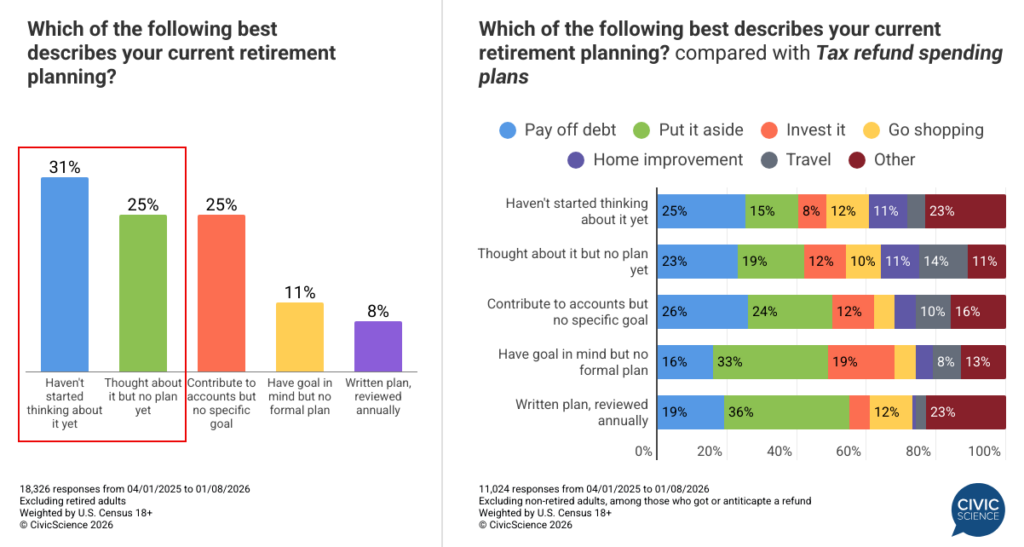
Baby Boomers might be the only ones paying attention to this.In our 3 Things to Know this week, we looked at deteriorating attention spans across U.S. generations. Over two-thirds of Boomers view theirs as good or very good. It drops to just over half – an uncannily equal 53% – among Xers, Zs, and Millennials. Anyway, what were we talking about? Oh yeah, we also learned that an alarmingly low percentage of working Americans have made any retirement plans, and that a sizable chunk of social media users would pay money for more premium accounts.
Publishers have a lot to think about when it comes to driving audience engagement. We did a deep dive this week into the features most likely to keep people on a site (“dwell-time” in industry-speak). The topline results are unsurprising. Breaking news and trending topics are the biggest draws, followed by personalized content recommendations and easy site navigation. The story gets much more interesting when you cut the results by age. Readers 45+ look like the Gen Pop. Younger audiences, however, value interactive content (polls, data visualizations, etc.) the most, followed by good content recommendations. Notably, younger readers are far more likely to follow specific authors/journalists. Publishers need to strike a balance in appealing to older and younger readers at once.

Weed is getting more and more popular. In observation of 4/20 this week, we published a snapshot of our cannabis tracking data for all to partake. The percentage of Americans who consume marijuana (or, at least, admit to it) reached an all-time high this year, climbing 4 points over last year. Daily usage has held steady, while the increase is being driven by weekly users. Traditional smoking remains the preferred form, with edibles creeping up the ranks. Vaping is waning to a distant third. It’s worth noting that cannabis users are much more likely to over-index across all of our emotional well-being metrics (happy ones and sad ones). You could argue the cause and effect either way.

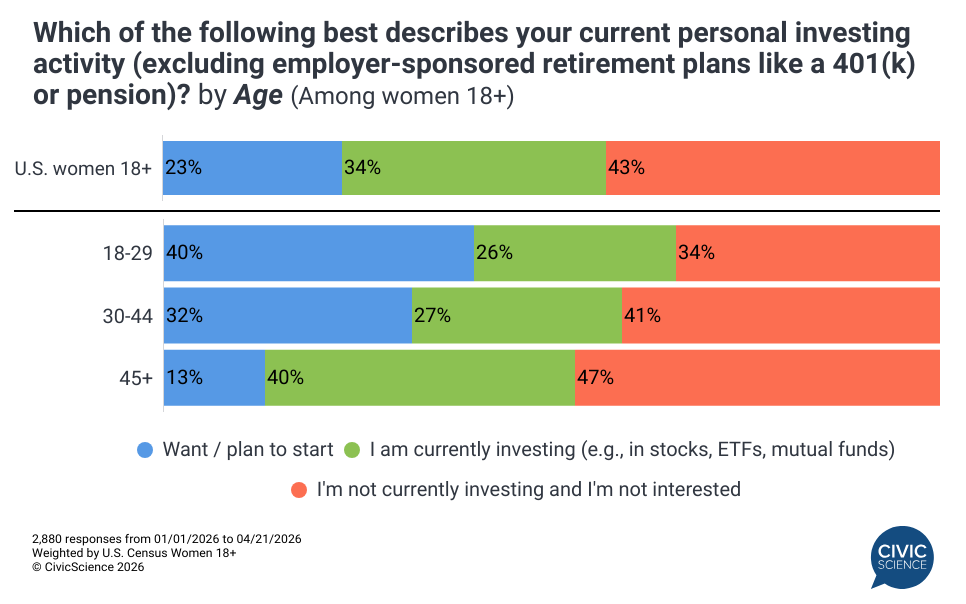
Financial institutions need to pay much more attention to women. With U.S. women outliving men by an average of 6 years, enormous amounts of wealth will transfer from men to their female widows over the coming years. Other data (not ours) suggests that upwards of 70% of these women will change financial advisers when that happens. Meanwhile, with younger women vastly outnumbering men in college applications, their long-term earning power will only grow. Anyway, we published 6 key insights about today’s female investors this week, learning that they’re more conservative than their male counterparts, more likely to do their own research, and increasingly confident in their overall financial outlook.
More awesomeness from the InsightStore ™ :
- Levi’s is a brand to watch, and nostalgia has a lot to do with it;
- In unrelated news, I’ll be in Miami for the POSSIBLE conference next week and would love to see you if you’re there. Hit me up!
The most popular questions this week:
Do you support or oppose the concept of “free-range parenting”?
If you were to pursue acting, would you prefer comedic, romantic, or serious roles?
Has your social circle grown or shrunk recently?
How willing would you be to participate in a spelling bee as an adult?
Would you work at your current company for another 50 years?
Answer Key: To each their own; Definitely comedic; Always growing; That sounds like a lot of fun; There’s nowhere else I’d rather work, but hell no.
Hoping you’re well.
JD