I got duped by AI this week.
It was innocuous – a video of a vision-impaired baby seeing its mom for the first time and grinning from ear to ear. It was the cutest thing ever. So, I shared it with Noelle and Maddie, who promptly dunked on me about it. “It’s AI Dad!”
I hadn’t felt that old since my first bout of vertigo a few months ago.
Normally, I vet everything I see and read online, even from the most reliable sources. I’m not the world’s tech-savviest person, but I’m a solid 8 out of 10. I force myself to learn the latest thing, if only so I can be adequately informed in my job. I also keep my guard up, most of the time.
In some ways, AI gets a bad rap. Where do we draw the line between AI-generated video content and high-end animation? Have you seen the real-life quality of video games lately? If content is designed to entertain, why should it matter if the smiling baby is real or not? I watched the stupid thing 20 times.
Alas, we know where the line is drawn. If I can tell it’s fake – right up to the line of looking real – I feel like I’m in control, like the joke isn’t on me. When it crosses that line, I become helpless.
There are many reasons AI might be the most unpopular technology in the history of mankind. It needs better PR, at minimum. We’ve been told it’s going to destroy jobs, data centers are going to wreck the environment and jack up our electricity bills, it’s making our kids less social, it’ll eventually become sentient and take over the world, et cetera. Now, we can’t even trust our own eyes.
Meanwhile, we’ve seen little upside so far, notwithstanding appreciable productivity improvements for the small few who use AI at work. Sure, it’s propping up the stock market, but that just means more concentrated wealth for the upper echelons. Where are the scientific and medical breakthroughs we were promised? Hopefully they’re coming, because otherwise what’s really the point? Better search results? More efficient shopping? Those are hardly enough to outweigh the negatives we hear so much about.
If you’ve read this weekly missive for any extended period of time, you know I’m a chronic optimist. I’ll cling to that here too. We’re very early in the AI era. Good things are just around the corner.
Right?
Here’s what we’re seeing:
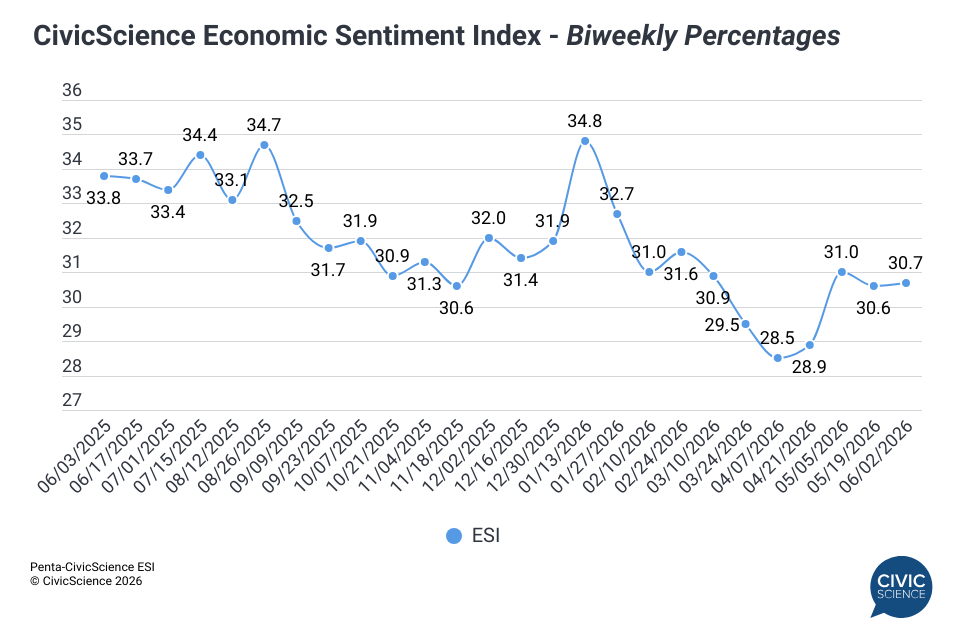
Consumer confidence basically broke even this week. Our latest Economic Sentiment Index showed the tiniest of improvements (+0.1 points), which is well within a simple margin of error. It’s the net result of people feeling better about their personal finances (tax refunds are still showing up) and worse about the job market and the environment for major purchases. It’s all happening against a backdrop of rising inflation, which should prove transitory once fuel prices recede, and resilient consumer spending, which is happening at the expense of depleted household savings and rising credit card debt. Nobody knows what the future holds.
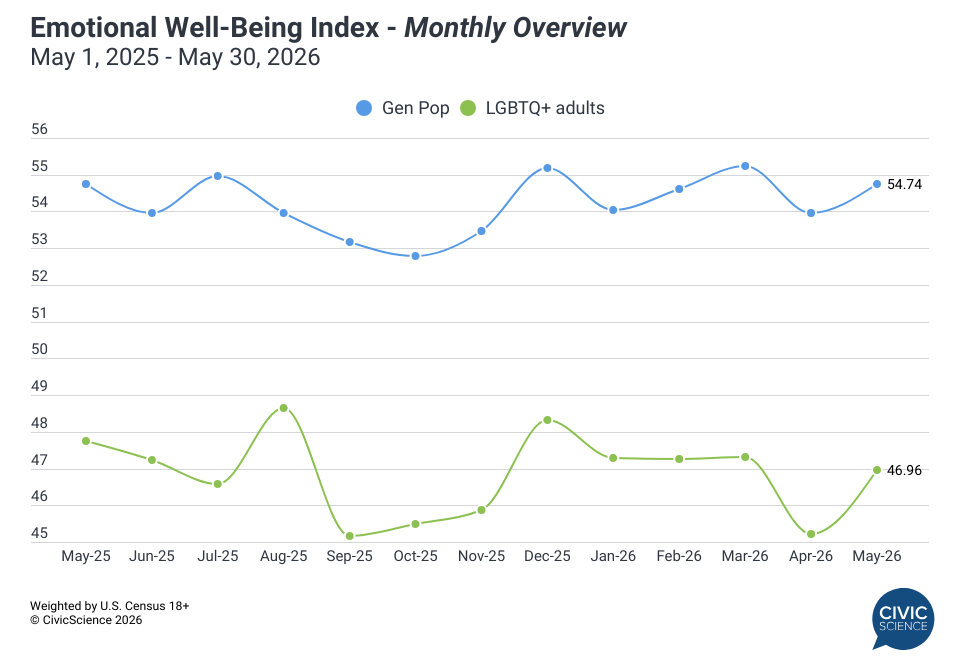
In rosier news, America’s collective mood improved in May. After rising prices and geopolitical chaos dragged our Emotional Well-Being Index downward in April, the numbers rebounded promisingly last month, landing exactly where we were a year ago (down to the decimal point). The gains were driven primarily by adults aged 55+, who are buoyed in anticipation of their summer travel plans (more on that to come). Notably, as Pride Month kicks off, we took a closer look at emotional well-being among our LGBTQ+ brothers and sisters, which also improved in May, but still remains woefully lower than the general population.
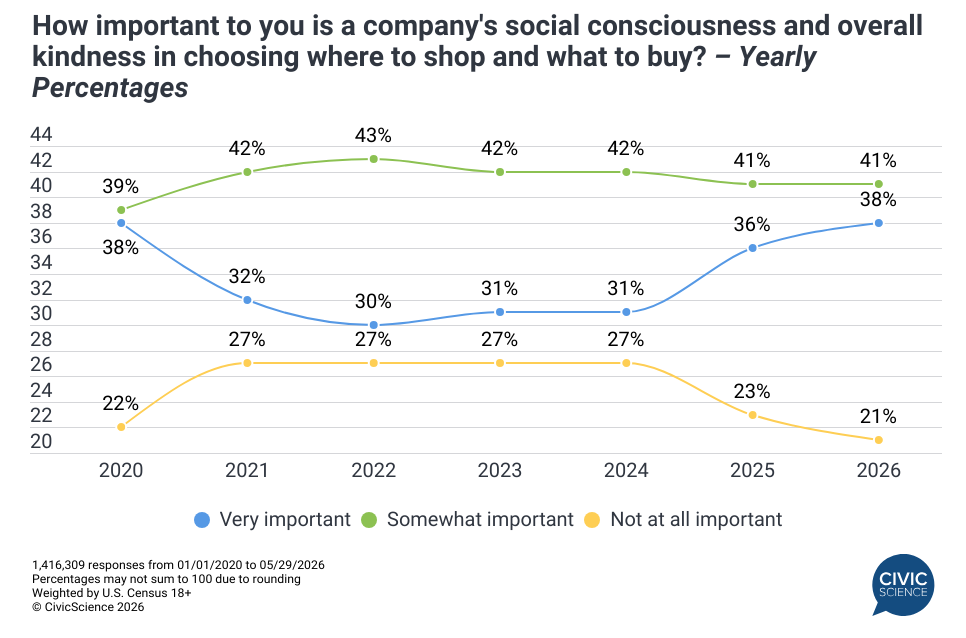
Speaking of Pride Month, U.S. consumers are showing rising support for brands that engage in it – so long as they mean it. The number of Americans who say they’re more likely to buy from companies that participate in Pride Month is up 33% over the past three years. There’s a stark age correlation, with Gen Z showing the most enthusiasm. A plurality of Baby Boomers are less likely to patronize brands that engage in Pride Month. Oh, Boomers. Across all groups, however, authenticity is key. Performative gestures will backfire – we listed the activities most likely to yield results. More broadly (and perhaps counterintuitively), consumers are valuing the social consciousness of brands more than they have in years.
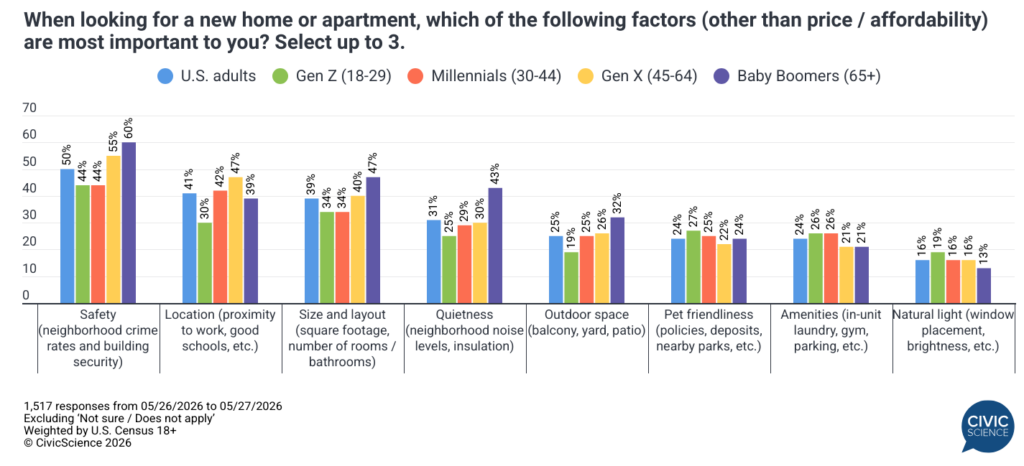
While neighborhood safety is the number one factor people consider when moving to a new home or apartment, the mix of priorities varies widely across generations. In our 3 Things to Know this week, we studied an array of (non-economic or job-related) reasons people do or do not choose to relocate. Gen Xers care most about proximity to work or schools, while Zs and Millennials care about nearby amenities. We also looked at the state of recession fears among U.S. consumers, learning that they are highest at the top and bottom of the income ladder. Lastly, we confirmed that lists and rankings are popular go-tos for people deciding which products or services to buy.
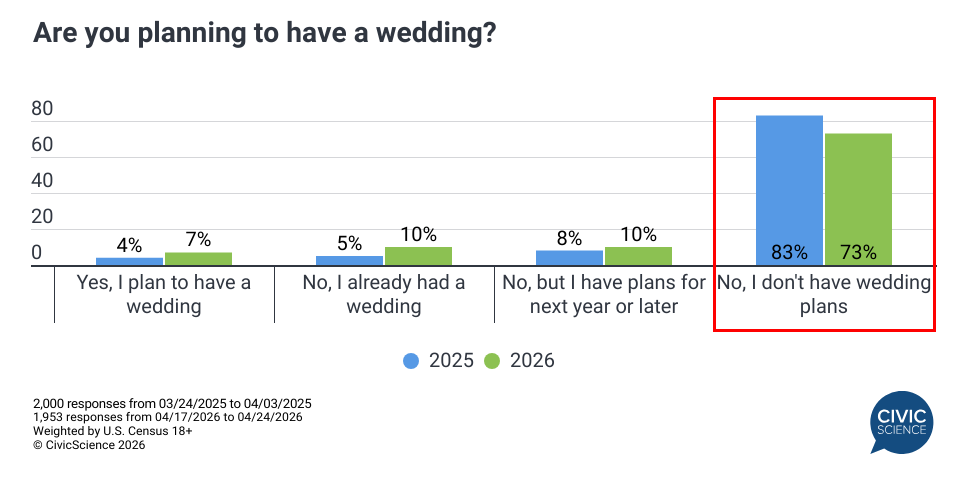
It could be a banner wedding season. It struck me as I reviewed our latest data on Americans’ wedding plans that Tara and I have more on our calendars than usual this year. Maybe it’s a coincidence, but indeed our numbers suggest that 2026 could see a surge in matrimonial activities. A larger percentage of soon-to-be newlyweds, however, are planning smaller ceremonies, receptions, and guest lists – possibly a nod to the current economic climate, or maybe a reflection of younger generations having made fewer friends, as the truism goes. We did look at where people plan to buy their wedding attire, and the data looks good for big retailers.
More awesomeness from the InsightStore™:
- Many summer travelers will be looking for pet-sitters in the next few months.
The most popular questions this week:
How often do you typically go to a local farmers’ market?
Do you generally watch pageants like Miss America?
Have you ever gone tailgating before a sporting event?
Do you feel you’ve outgrown movies, music, or TV shows you used to love as a teen?
Have you ever participated in a mentorship program as either a mentor or mentee?
Answer Key: I try every time I’m near one; Not one single second in my entire life; It’s one of my very favorite things; No way – I’m still stuck in the 80s and 90s; Not an official program, but I’m on both sides of that table with numerous people.
Hoping you’re well.
JD