I haven’t had much to say about AI here (yet).
Not that you’re clamoring for it. It’s hard to escape the deluge of “expert” AI prognostication.
Me, I try to stick to areas where I have an informed point of view. The truth is, as much as AI dominates the business and media zeitgeist, it’s still very early in the adoption curve among the broader population. Its impact on consumerism today is modest.
Wherever AI is ultimately going – for good or evil – your guess is as good as mine. I am partial to the more cautious, ethical vibe of Dario Amodei at Anthropic. I haven’t yet figured out where Sam Altman falls on the wide spectrum between Steve Jobs and Adam Neumann. Time will tell.
None of that should suggest I’m not thinking a lot about it. On the contrary. I chair our company’s cross-departmental AI working group – where I learn more than I contribute. We have the potential to automate thousands of hours of onerous research activities this year. Our engineering team might already save that much time in a single quarter. I have a fiduciary responsibility to take that very seriously.
More of my brainpower is focused on bigger picture questions, like: “What will AI mean for the future of advertising?” To say our media clients are concerned about it is an understatement. If, as predicted, consumers increasingly delegate their shopping to AI agents, what role – if any – will advertising play?
One potential scenario – as happened with online search – is that advertising becomes purely about gaming LLMs to make sure your brand or product rises to the top of their results. This future would be patently bad, maybe existentially bad, for media companies.
I have a more optimistic view.
If you watched the Super Bowl, you know Anthropic ran arguably the most impactful spots of the night. The jabs they threw at OpenAI for integrating ads in their platform were brilliant. If I’m ever to truly trust my AI companion (which is the whole point), I don’t want it making decisions or recommendations based on the highest bidder. The least ad-infested LLMs will eventually win.
Instead, I believe AI will spur a renaissance of true brand marketing – advertising that’s less about getting me (or an agent) to click and buy and more about building emotional connections and trust. Brand loyalty will dictate the choices I make from the recommendations I receive. Over time, my AI agent will learn which brands I love. If you’re not in that mix, you might as well not exist.
That should be music to the ears of CMOs and premium media companies. Marketers can focus more on principles, storytelling, and building communities – less on optimizing search terms and clicks. Media outlets can lean into the quality and relevance of their content, their connection with audiences. The right ad on the right platform will supercharge a brand’s mission. Shoddy click-farms will fall by the wayside, pushing ad dollars upmarket.
At least that’s what I hope will happen. Because it’s the best outcome for consumers, too.
Besides, plenty of other things about AI probably won’t be so good.
Here’s what we’re seeing:
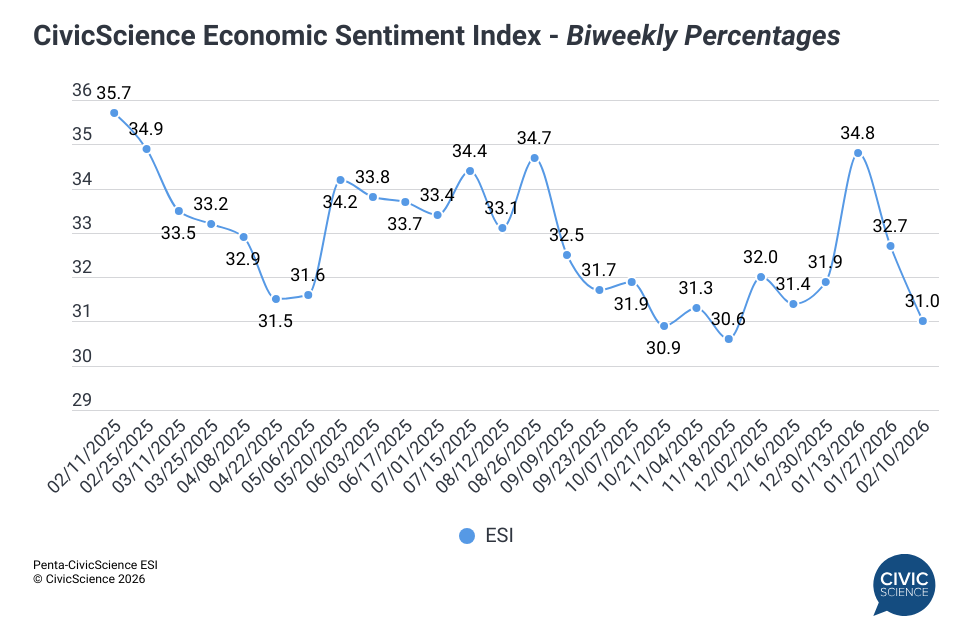
People are objectively sour on the job market. Our Economic Sentiment Index fell steeply for the second consecutive reading this week, forfeiting all the gains we saw since early December. Driving the decline was a major drop in attitudes toward the employment market. Take what you want from the Trump Administration jobs report this week, but our jobs metric hit the lowest point we’ve seen in the 12 years we’ve been tracking it. Talk to anyone you know who’s trying to find a job right now, and you’ll know the real story. It’s rough out there.
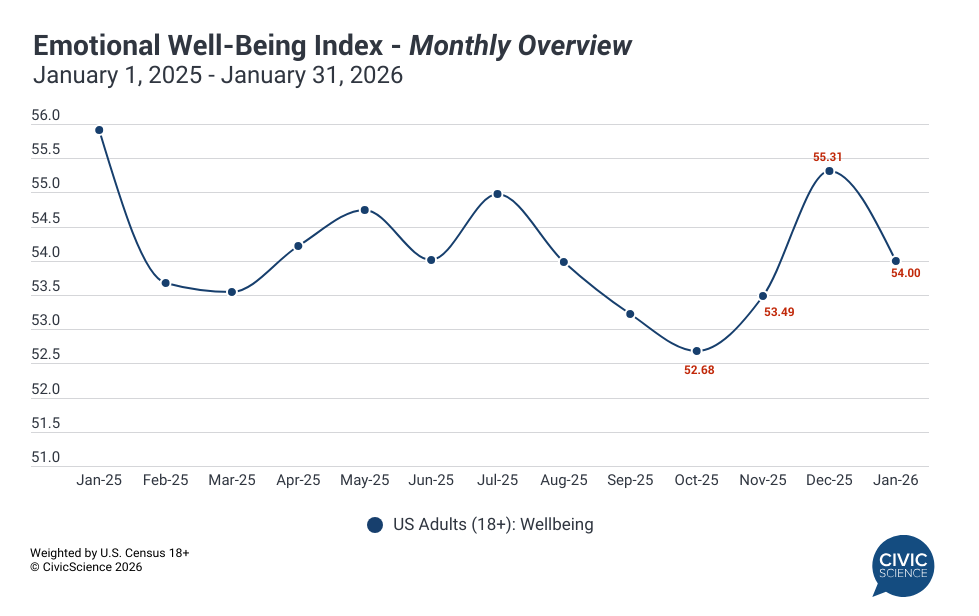
For economic and other reasons, America’s overall mood plummeted in January as well. Our January Emotional Well-Being Index dropped a full point last month, after upward swings in both November and December. Feelings of worry and fear spiked after the new year, owed as much to the geopolitical climate as the economy. Notably, the declines were attributable primarily to Hispanic and White respondents, while well-being measures among Black respondents remained positive.
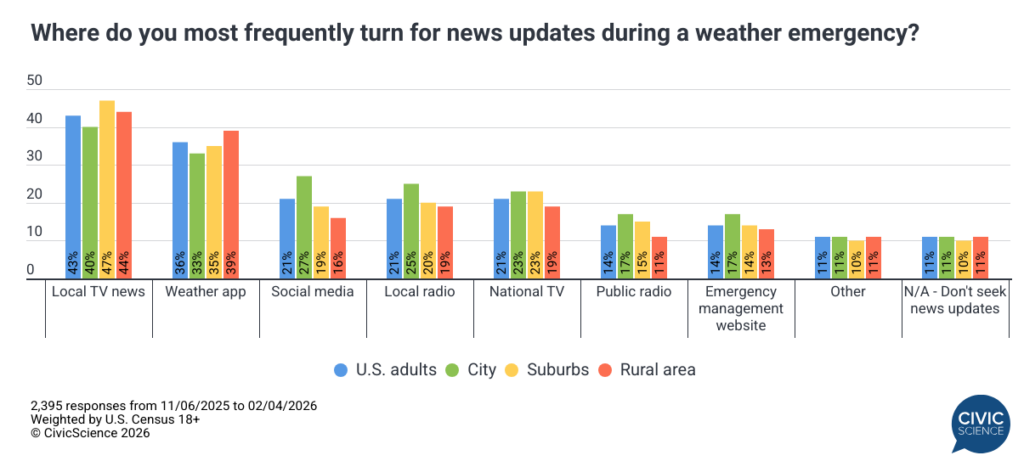
Local TV news continues to fend off weather apps as the number one place people turn during extreme weather. In our 3 Things to Know this week, we looked at how Americans are responding to the rash of brutal cold weather over the past few weeks and where they turn for information. Local news is still king, but the numbers vary across urban, rural, and suburban areas. We also learned that a proposed 10% cap on credit card interest rates draws broad public support because of course it does. Lastly, as Ford and GM look to launch their own banks to manage auto loans, we found a high level of enthusiasm for it among younger drivers.
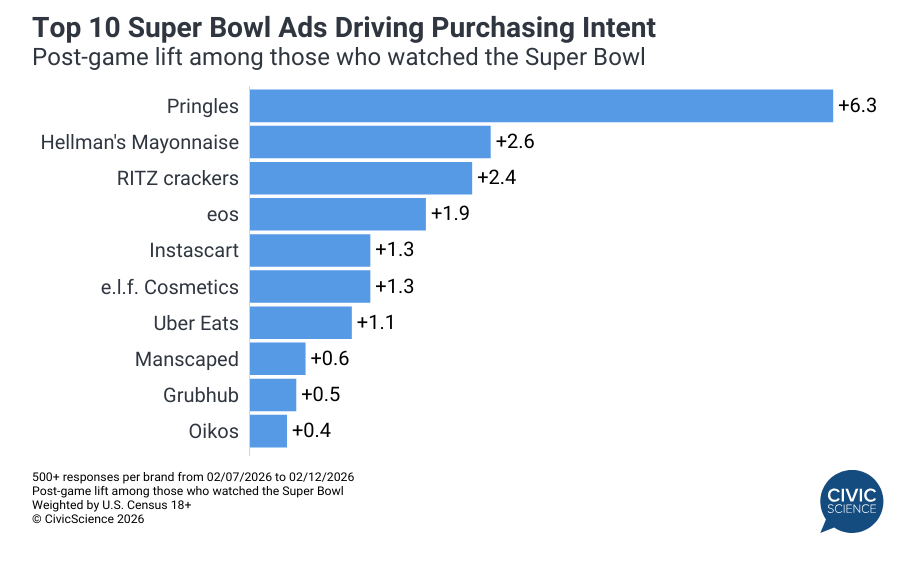
Super Bowl commercials work. Speaking of (see above) brand marketing, we published a report this week on the most effective Super Bowl ads, measured by the increase in near-term purchase intent among viewers before and after the game. The 10 brands with the biggest gains spanned categories from CPG food to beauty to delivery services and more. Looking specifically at the coveted 18-44-year-old age group, we saw particularly big spikes in intent toward Uber Eats and eos, a penchant for celebrity-endorsed products, and a lot of people who view snacking as a form of “self-care,” which makes sense given that our collective emotional well-being sucks.
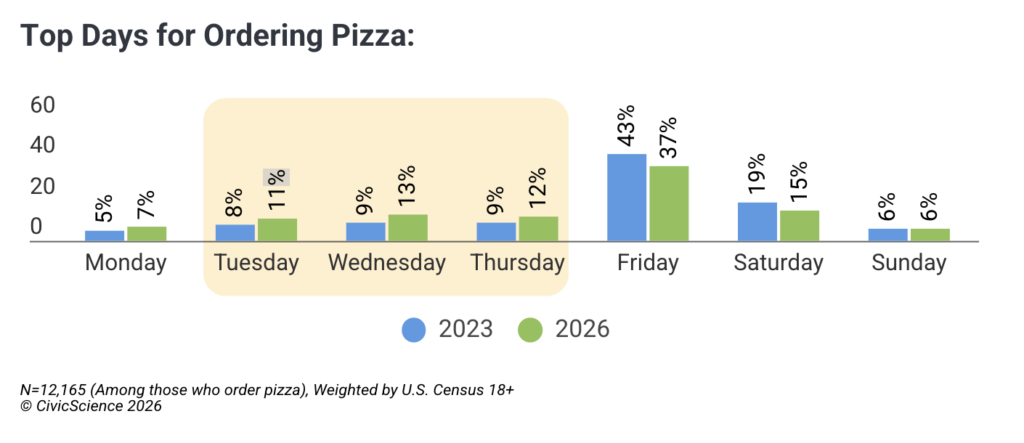
Maybe people would be happier if they ate more pizza. We published an extensive study this week on trends in pizza consumption and, as someone in a third of Americans who eat pizza at least every couple of weeks, I couldn’t get enough of it. Cherry-picking a couple of stats that caught my pie, I mean, eye: Ordering by telephone (voice) is still the most popular way to do it, but only barely. Domino’s is the number one national chain, but regionality matters a lot. Ordering pizza midweek is climbing, while ordering on weekends is falling. Anyway, there’s a lot more. Just check it out.
More awesomeness from the InsightStore:
- Here’s everything advertisers need to know about this weekend’s NBA All-Star game.
The most popular questions this week:
Are you planning any major or minor home improvements this year?
How interested are you in local history?
Do you generally find cooking to be more of a pleasure or an obligation?
How often do you indulge in a sweet treat?
Do most Americans share a set of fundamental values?
Answer Key: It never ends; A lot actually, Cooking is a pleasure, planning sucks; Seldom if ever – I was born without a sweet tooth; Sadly no, at least not right now.
Hoping you’re well.
JD
PS- I’ll be taking off next weekend as I head south for our big board meeting.