Noelle has four jobs this summer.
She’s working at a kayak shop, interning at an animal welfare non-profit, teaching adult rowing classes, and volunteering at our church as it rebuilds. She also exercises twice a day, because her crew team has some invasive social-fitness-peer-pressure app, and she hates to lose.
Somehow, it’s not enough. She’s jealous – even self-conscious – because two of her friends are working for their dad’s friend’s AI startup, writing sports-betting code. Real-life internships are hard to come by for rising sophomores, and nepo-jobs are against company rules, even though she’s studying exactly the things we do.
Noelle would say she’s self-motivated, and it’s true – sort of. Like everything, it came from somewhere.
One could argue it’s genetic, but I certainly wasn’t like that at her age. I spent the summer after my freshman year parking cars to pay for beer and weed. I slept until Noon. She’s out of the house most mornings by 6 am. Tara had more substantive jobs and responsibilities, but she also knew how to chill.
It’s definitely more nurture than nature. Tara and I weren’t exactly “Tiger Parents,” but we (mostly she) ran a tight ship. We’ve both modeled busy, goal-oriented lives. And, yes, our kids were privileged in their opportunities.
But Noelle is far from an outlier, which is my point. It seems many of the kids – especially the girls – in this generation are more active, more driven, more pressured than the next. I don’t know most of their parents, but I assume they had similar Gen X upbringings and, therefore, raised their kids like we raised ours.
Necessity is the mother of invention.
From the time today’s twenty-somethings were tweens, they’ve been told the climate was self-destructing, that democracy was at existential risk, that a pandemic could destroy humanity, that they will never be able to afford a home, and – now – that AI will wipe out the job market. Instead of cowering, they work their asses off.
Baby Boomers, in the glow of post-War America, grew up believing prosperity was their God-given right and spent the next 60 years rigging the system to ensure it, future generations be damned. Gen Xers were called failures before we even started. We found our way with a giant chip on our shoulders. Millennials were told the world revolved around them, only to be shell-shocked and unprepared when it didn’t.
But Gen Z has its eyes wide open, for better or for worse. Most have responded by aiming high, regardless of how bleak their elders paint the future for them. Others Zs, unfortunately, have retreated to their basements, playing endless video games and befriending AI chatbots.
Fortunately, the former vastly outnumber the latter.
The future is bright.
Here’s what we’re seeing:
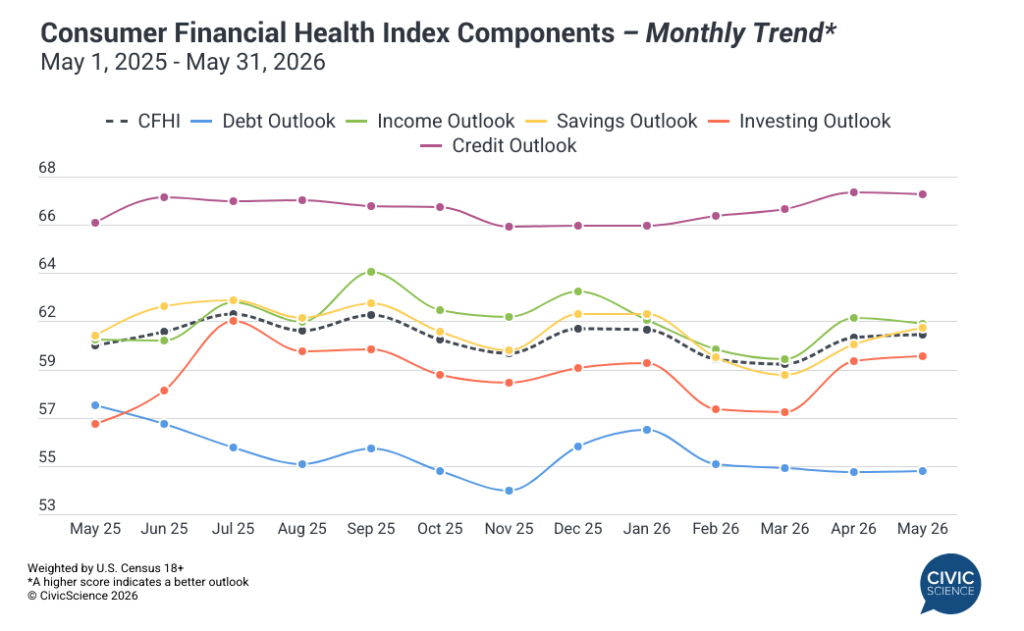
Americans’ (perceived) financial health is holding steady. Our May Consumer Financial Health Index improved by the thinnest of margins last month, boosted mostly by respondents’ outlook for their savings and investments (ie, the markets keep going up). Concerns over household debt stayed flat, but were still far worse than the other metrics. The most notable development to call out is the downturn in our personal credit metric – the first such dip in several months. It’s too early (and small) to attribute that to growing credit card defaults, but we’ll see.
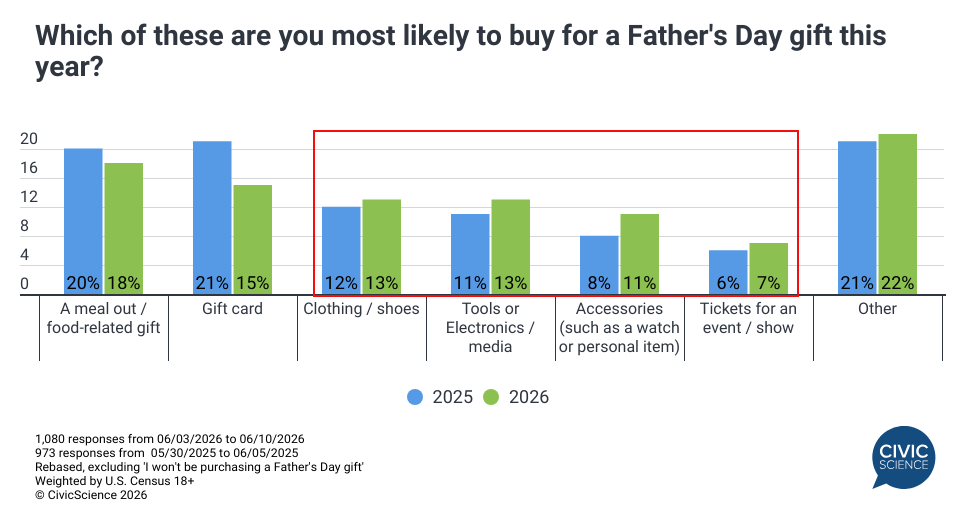
Our continued economic resilience should be good for dads this year. With Father’s Day a week away, over half (53%) of U.S. adults are planning to buy a gift for their old man, an increase of six percentage points over last year when we were in tariff uncertainty hell. The average expected outlay is up this year as well, driven by an increase in those planning to drop $100 or more. While the largest share of dads would prefer time with family or a meal as a reward for all their awesomeness, the categories with the highest projected increases in anticipated purchases this year are physical goods. We’ll take what we can get.
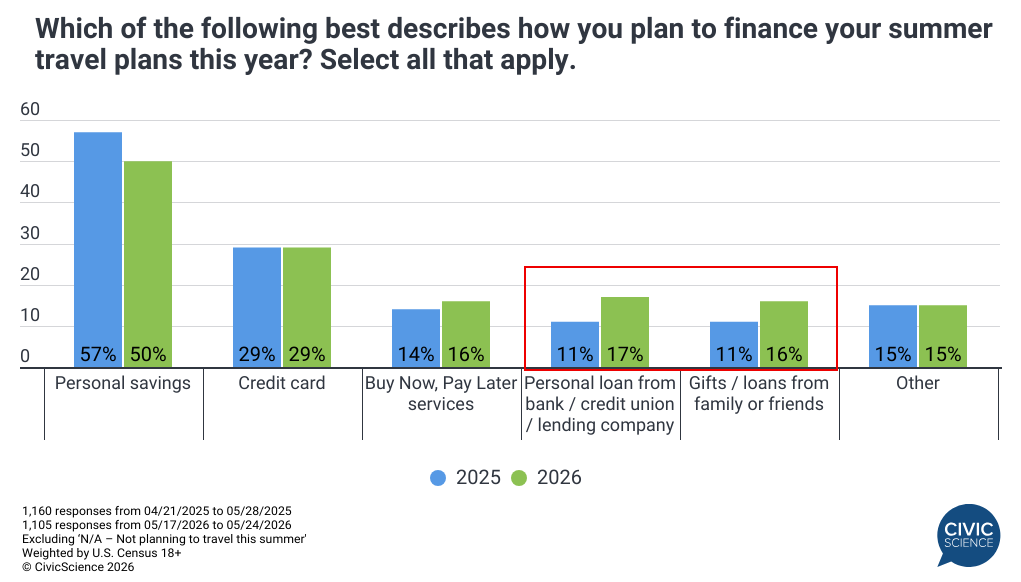
People are finding creative ways to fund their summer vacations this year. As we reported last week, high fuel prices and inflation aren’t raining on Americans’ summer travel plans, and we now have some hints as to why. In our 3 Things to Know this week, we found that a growing percentage of American travelers are taking loans from institutional lenders and friends or family to fund their trips. Fewer are relying on savings. At the same time, we also learned that the popularity of Buy Now, Pay Later services is still growing in 2026. Nothing about those last three sentences is good, unless you’re in travel or retail. Lastly, we examined the continued entrenchment of “convenience apps” like Uber and DoorDash in people’s lives.
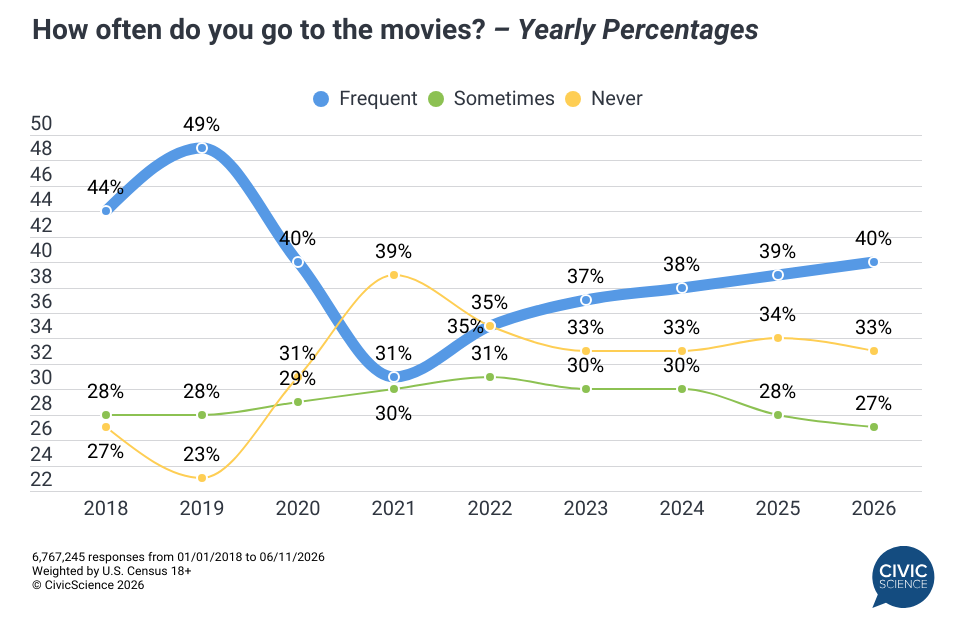
Movie theaters still have a pulse. Although their greatest days are likely behind them, cinemas are having a banner year thus far in 2026, on the backs of brand-name blockbusters and YouTube spinoffs that few people saw coming. While our data suggests these films aren’t bringing in a ton of new people to the theater, occasional moviegoers are showing up more often. It makes sense to me. The overall experience – the comfy recliners, sound, and premium perks are so much better. We also learned that the percentage of people who rank horror movies as their favorite genre has doubled since 2020. I don’t get it.
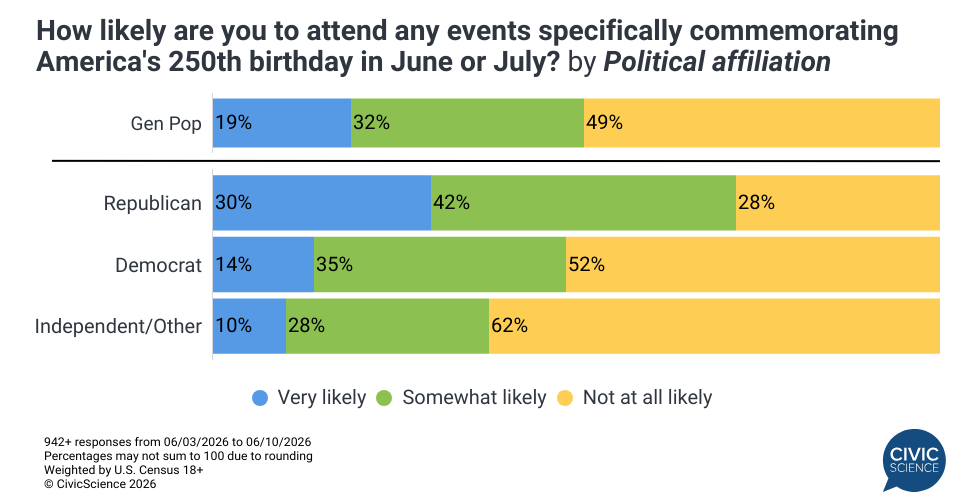
America picked a lousy time to turn 250. With our nation’s semiquincentennial festivities only a couple of weeks away, enthusiasm varies exactly as you might expect. Republicans are way more eager to celebrate, buy related merchandise, and attend events. Excitement among Democrats is far more muted. I suspect the inverse would have been true had the Declaration of Independence been signed in 1772. On a happier note, a majority of people in both parties would look favorably on brands that actively celebrate the occasion.
The most popular questions this week:
Do you plan to attend any concerts this summer?
Do you prefer chemical, technological, or natural remedies for repelling mosquitoes?
To what extent do you trust information generated by artificial intelligence?
How comfortable do you feel wearing “home clothes” (such as pajamas or sweatpants) in public?
Answer Key: At least 4; All of the above if they work; 80%; Um, no; Totally.
Hoping you’re well.
JD