If you wanted to buy someone the perfect Christmas present, would you simply ask them what they got last year?
Of course not.
But that’s basically how most targeted advertising works.
I get it. Companies have more data about their customers’ past behavior than they know what to do with. They gather it (ethically) via loyalty card programs and websites. They also buy it on the cheap (at receding levels of ethicality) from credit card purveyors, credit reporting companies, location tracking services, or any number of businesses that aggregate it all. It’s abundant, easily accessible, and not entirely useless in predicting what someone will buy next.
Behavioral data has become a commodity. If you go to a data marketplace like The Trade Desk or other advertising platforms, you’ll find millions of buyable “segments” of consumers you can target based on this backward-looking data. The plentitude and negligible difference in effectiveness of these segments have created a race to the bottom on price. That’s good for advertisers (at least from a cost standpoint), not so much for media companies, who’ve watched the value of their inventory decline. It’s bad for everyone – consumers included – when a deluge of cheap, sloppy ads lands in front of the wrong person.
There’s a reason Google is such an advertising behemoth. Search is a powerful signal of intent. It’s only imperfect because it’s hard to know where someone is on the research->browsing->buying journey.
We discover intent a different way. We ask people – lots of them – what they want and when.
Take the question below:
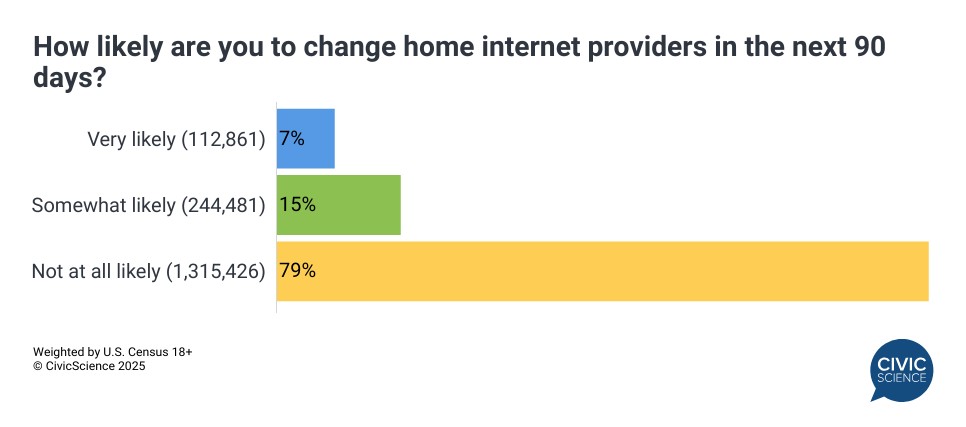
Over 100,000 people have told us there’s a good chance they’ll switch home internet services in the near future. Will all or even most of them actually do it? Definitely not. But it’s a really strong indicator that they’re thinking about.
For most advertisers, 100,000 people isn’t big enough “reach,” in industry-speak. That’s ok. We know over 3 billion things about the 150+ million people who’ve answered our surveys. We can predict 175 billion things about them with >90% accuracy, 325 billion things with >80% accuracy. Those numbers grow by the day (Thanks, AI). In other words, using a bunch of fancy math, we can find lots and lots of people who look reliably like the 100,000 we started with.
It all adds up to a remarkably effective and non-creepy way of getting the right ad in front of the right person at exactly the right time. And it’s based on nothing more than the wants, needs, and plans they’ve willingly shared with us.
So, what do you want for Christmas?
Here’s what we’re seeing:
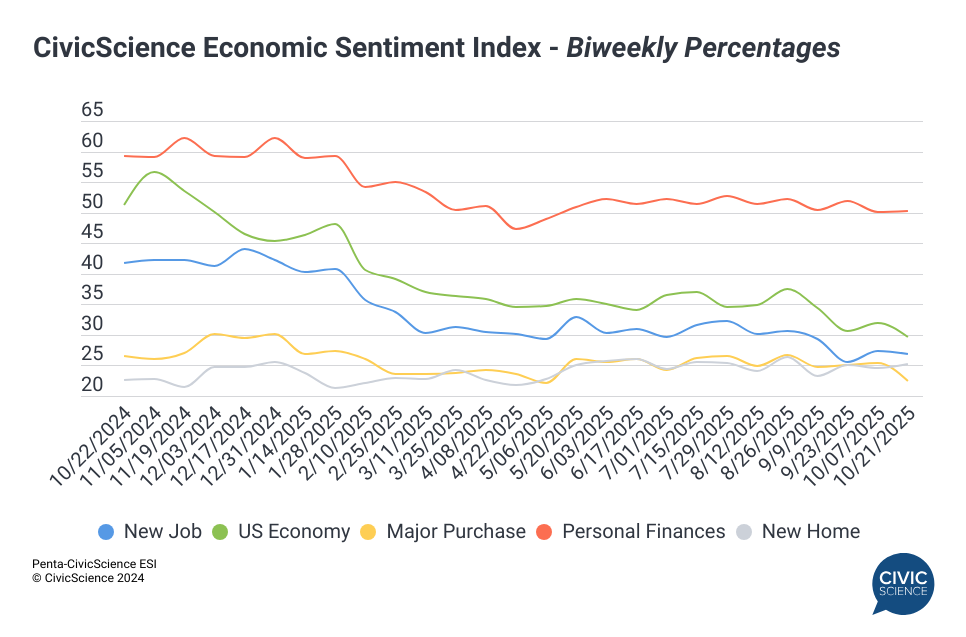
Turns out, a prolonged government shutdown doesn’t help consumer confidence. Our Economic Sentiment Index reached its lowest point in over three years this week, as a multitude of factors – pesky inflation, tightening labor markets, and Washington incompetence – weigh on Americans’ hearts and wallets. Confidence in major purchases like cars, large appliances, and furniture have taken the biggest hit, as consumers fall deeper into a wait-and-see mindset. Longer-term optimism for the U.S. economy dropped steeply as well, betraying any faith people have in our leaders to steer us out of it. I remain skeptical that these macroeconomic woes will hurt the holiday retail season too badly, because people still feel alright about their personal finances. Q1 of next year (and beyond) is another story.
Cryptocurrency services are a key battleground for banks looking to lure younger customers. In our 3 Things to Know this week, we found that 3 in 10 U.S. adults would consider using crypto services if their primary bank offered them (which many are beginning to do). The trust in major banks is key in bridging the gap between crypto interest and fears about its stability and security, especially among younger adults. Speaking of security, we also looked at rising concerns about cybersecurity in the U.S., exacerbated by the rise of AI and certainly not helped by the big AWS outage this week. Lastly, we uncovered a striking correlation between people with heightened levels of economic optimism and those who are likely to pay for online education platforms like Coursera or LinkedIn Learning. Maybe it should be the opposite.

At least everyone will smell good in January. While the entire beauty industry has remained relatively immune to pullbacks in discretionary spending this year, the fragrance category has been a particularly stellar standout. This trend shows no signs of slowing as we enter the peak holiday shopping season. Eight percent of early shoppers report already having bought perfume or cologne for someone as a holiday gift, with a whopping 50% of remaining shoppers expecting to do so – and over half of those buyers plan to do so before Thanksgiving. If you’re in the fragrance trade, as a brand or retailer, here are some helpful tips on where (and when) to find them.

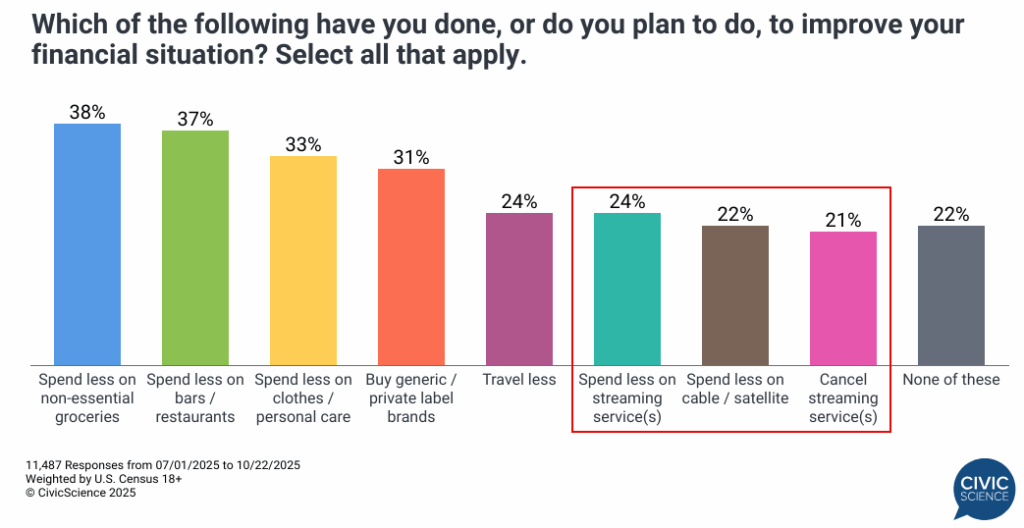
The scales seem to be tipping for streaming services. As the pace of cord-cutting has slowed this year (to be fair, it was pretty torrid to begin with), streaming subscribers are settling into new patterns of usage, fatigue, and churn. In our latest data, we found that – among existing users – a larger percentage now say they’ve canceled one or more services recently, versus those who said they’ve signed up for a new one. Still others are moving to ad-supported tiers or looking for bundles to save money. Generally, though, compared to most other spending categories, streaming services have remained relatively protected from financial headwinds.
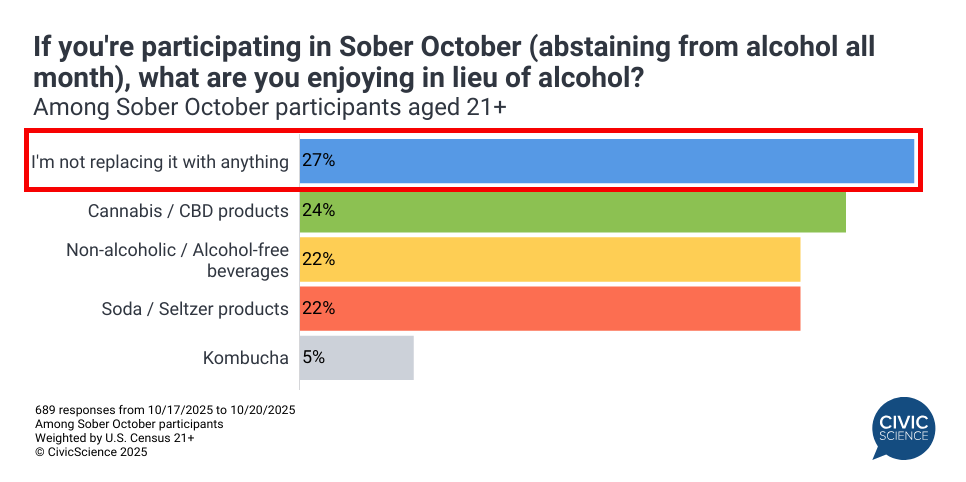
I really don’t want to write about Sober October, but here we are. I mean, I don’t observe Dry January, but I see the point. It’s an explicable reset after the gluttonous stretch of holiday parties. Why this? Because it rhymes? Is it a conspiratorial brainchild of cannabis and non-alcoholic beer companies (like Valentine’s Day and Hallmark)? Regardless, Sober October is apparently a thing now, with upwards of 20% of drinkers participating. The rate is highest among Millennial drinkers and there’s a notable correlation among people with a grim debt outlook – so maybe it’s just about saving money. At least that makes sense.
More awesomeness from the InsightStore:
- 5 key insights about Hispanic holiday shoppers this year;
- Our guest on the Dumbest Guy in the Room podcast this week was Perry Sook, the Chairman and CEO of Nexstar. We talked about all things local TV news, the impending acquisition of Tegna, and lots more. My personal highlight was when Perry said – unprompted – that this very email helped inspire him to start NewsNation. Even if he was just being polite, I’ll take it.
The most popular questions this week:
To what extent do you think AI-generated content should be regulated?
Are you a fan of pumpkin-flavored dishes?
Do you think it’s time to phase out the penny in US currency?
Do you think it is necessary to attend a highly-ranked college in order to succeed professionally?
Answer Key: Of course it should; Love it, especially pumpkin curry; It’s not a no-brainer, but yes; Absolutely not; No; LOL!!!
Hoping you’re well.
JD
Want to be on the list to receive this weekly email? Subscribe here.
In case you’re wondering, I write this informal email to CivicScience clients, friends, and other VIPs every Saturday morning. If you’re getting this, you’re either one of those people or were referred to me by one of them. I always love your comments and feedback.