CivicScience has the world’s largest proprietary database of real-time declared intent, allowing brands to activate high-performing advertising that drives up to 80% better performance. See how our partners achieve superior marketing outcomes here.
Christmas itself may still be months away, but for some, the shopping season has already begun, thanks to the likes of Amazon Prime Day. In fact, 16% of U.S. adult respondents who buy holiday gifts say they’ve already started checking items off their holiday shopping lists for this year. That percentage is poised to grow this month as Christmas in July sales offer consumers a further head start on their winter holiday shopping.
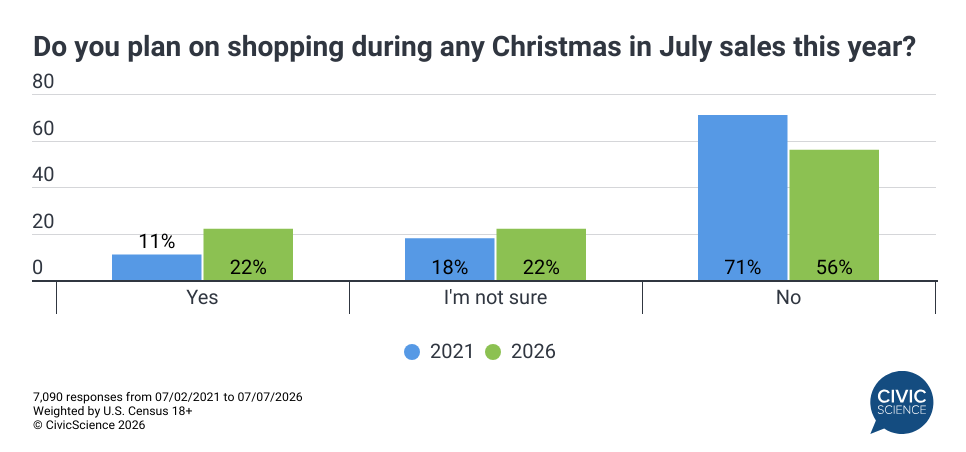
According to the latest CivicScience data, 22% of Americans plan to shop during Christmas in July sales, a figure that has doubled since 2021, highlighting the growing prevalence of the “year-round” holiday shopping experience. The data also suggest the possibility for increased demand, as another 22% are currently unsure whether they’ll participate in sales. It’s also important to note that these Christmas in July intenders are more than twice as likely as the average holiday shopper to report they’ve already started shopping for the holiday season (34% vs. 16%, respectively).
A look at the breakout of those planning to shop reveals men slightly outpace women in their intent to shop during Christmas in July sales (25% vs. 21%), while adults aged 44 and younger–led by Gen Z aged 18-29–significantly outpace those 45+. Christmas in July is also notably more enticing for parents (29%), who outpace non-parents (19%) and grandparents (15%) in shopping intent by at least 10 percentage points each.
AI is a Key Asset for Christmas in July Shoppers
Agentic shopping is more than just a buzzword and is sure to be a key feature in holiday shopping this year. While Americans overall continue to be skeptical about the use of AI, a strong majority (69%) of Christmas in July shoppers say they’re at least ‘somewhat’ likely to use AI (e.g., chatbot, smart search, shopping agent) to help with their holiday shopping this year, far higher than the 43% among the average American holiday shopper (excluding those not shopping for holiday gifts).
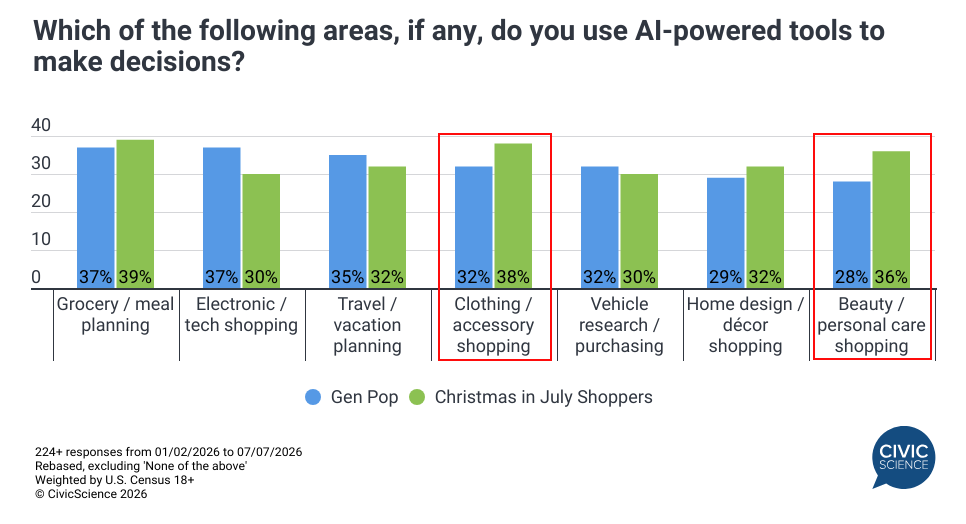
But the use of AI among these consumers extends beyond the holidays. Christmas in July shoppers notably over-index the Gen Pop in using AI to support them when shopping for beauty, clothing, and accessories. This existing comfort zone suggests where agentic shopping is likely to have the greatest impact for these consumers, given that these two categories are particularly common on holiday shopping lists.
Why It Matters: Christmas in July Shoppers Signal Opportunities for the Upcoming Holiday Season
Consumer-declared data from CivicScience highlights two key reasons why Christmas in July shoppers should not be overlooked by retailers, brands, and advertisers as they prepare for the prime winter holiday shopping season in the fall:
- Optimism About Personal Finances: 41% of Christmas in July shoppers say their personal financial situation will ‘get’ better in the next six months, outpacing the average American by eight points (33%).
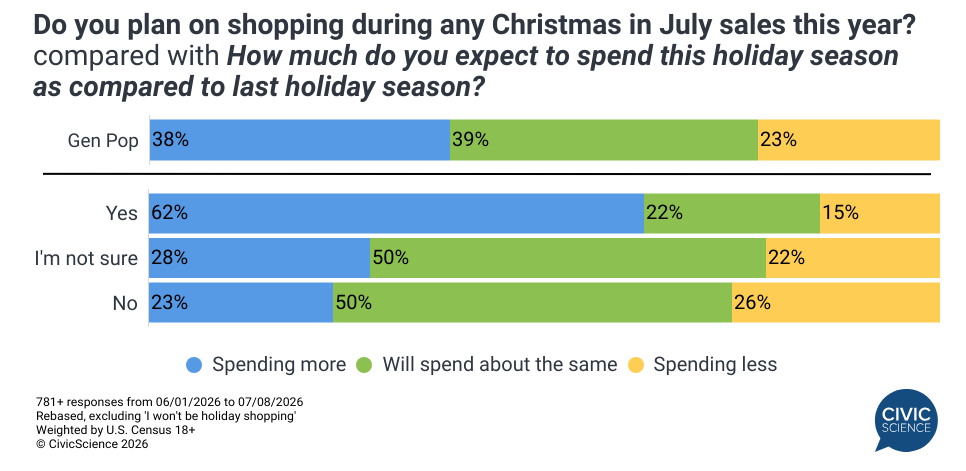
- Bigger Holiday Budgets: Data show that 62% of Christmas in July shoppers expect to spend ‘more’ on their holiday shopping overall this year compared to last year (excluding those not shopping for the holidays). This compares to 38% among holiday shoppers overall.
- Gateway to Customer Retention: Christmas in July may help build loyalty for Q4 shopping. One-third of Christmas in July shoppers report being more likely to return to the same retailer for their winter holiday shopping, giving brands a key head start on customer retention efforts before shopping ramps up.
Christmas in July is a critical window into the upcoming prime holiday season. With these early shoppers signaling bigger budgets and a clear path to winter loyalty, brands can’t afford to wait until fall to engage them. CivicScience’s real-time insights provide the data needed to meet these high-intent shoppers where they are and convert early intent into action.