I’m told the World Cup is starting in a couple of weeks.
You’d hardly know it. The buzz around the event is barely louder than the fluorescent light in our conference room.
In any other host country on the planet, the zeitgeist would be dominated by World Cup anticipation long before the fortnight preceding it. Heck, in most countries not hosting the extravaganza this year, the headlines are already far more soccer – er, football – centric than they are here.
There are lots of likely reasons. For starters, no matter how much we talk about the rising popularity of soccer in America, it still ranks far down the list on metrics that matter. America’s four major professional leagues – and the Power 4 conferences of college football – dwarf the MLS in overall revenues. Revenues are a proxy for TV rights deals. TV rights deals are a proxy for fan interest. Yes, I’m oversimplifying and, yes, you could argue that soccer is popular on other vectors – self-reported fan interest, youth participation, etc. But, if we’re being really honest, we know where the sport lives in our collective psyche.
Perhaps (no, definitely) there would be more excitement about the World Cup if we had a chance in hell of winning it. We don’t, per usual. Our odds of hoisting the trophy are 7X worse than Portugal’s, a country smaller than my home state of Pennsylvania. Alas, as the truism goes, our best athletes all play other sports (see: above).
It might also help if we had a few celebrities or social media influencers on the team. I’d challenge nearly anyone to name three players on the USMNT – or even one. There’s no Caitlin Clark, no Travis Kelce, and certainly no Cristiano Ronaldo, drawing eyeballs to U.S. men’s soccer. You can’t overstate how important that is today.
Or maybe, quite simply, geopolitics is sucking so much oxygen out of the room that we don’t have the cultural bandwidth for much else, even the single biggest global event of the quadrennium. Political news crowds out almost everything, even other political news. You’d think we solved the climate crisis, given how nobody talks about it anymore. When’s the last time you heard anyone mention the unresolved Epstein files? Things simply fade, replaced by the latest clickbait du jour.
Maybe the World Cup will capture our focus when it starts – hopefully when our team makes it out of their cupcake group round. We could all use a nation-unifying distraction.
If only we could keep the politics out of it.
Here’s what we’re seeing:
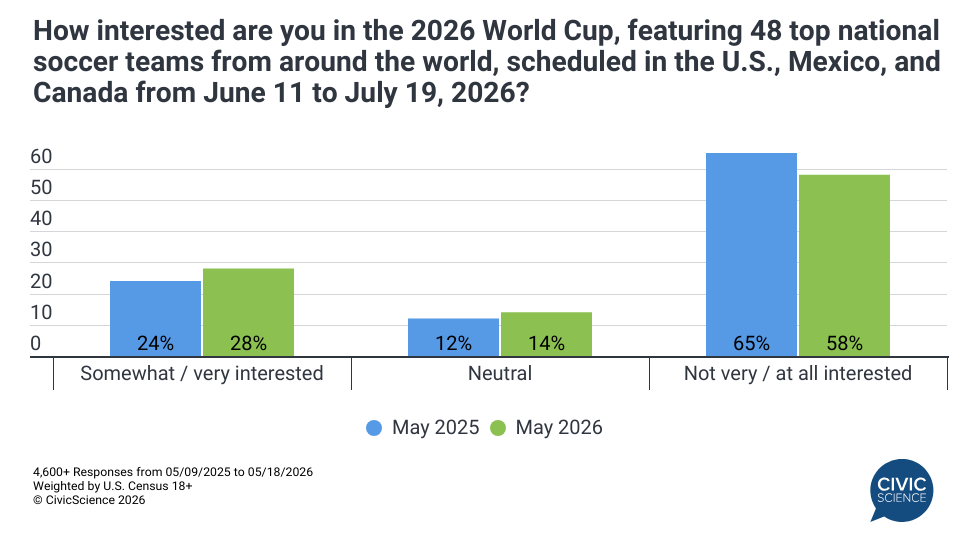
To prove my point, fan enthusiasm for the upcoming World Cup is only slightly higher than it was a year ago. A mere 28% of U.S. adults say they’re at least “somewhat interested” in the upcoming event, up only 4% from when we first asked about it in May of 2025. Only 16% say they’re “very likely” to watch the games on TV. Nonetheless, it’s still an attractive consumer audience for advertisers – younger, multicultural, tech-savvy. While older generations are the most likely to tune in to support the U.S. team, younger viewers are being lured by their affinities for specific (non-U.S.) players, other international teams, or sports betting.
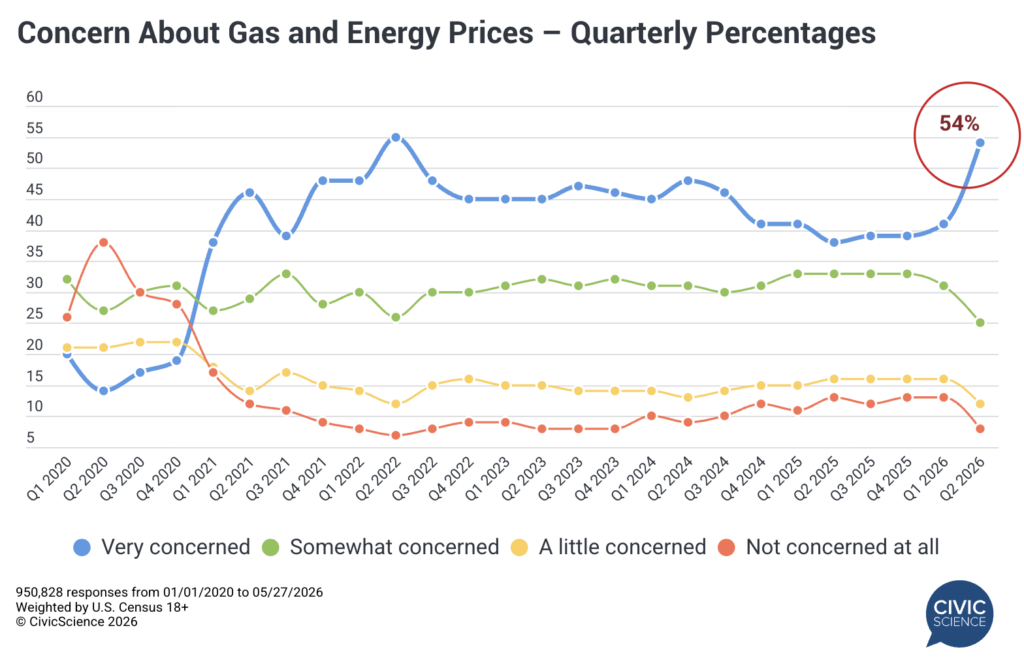
Americans are preoccupied with high gas prices, but it doesn’t seem to be driving interest in EVs. Fifty-four percent of U.S. adults report being “very concerned” about gas and energy prices this month, up from 40% two months ago, and reaching highs we last saw in early 2022. As a result, 39% of respondents say they’re making it a point to drive less. Logic would dictate that these circumstances are ripe for people to consider an electric car for their next purchase – but no. Unlike the last time gas prices skyrocketed, interest in EVs has been flat over the last quarter. The market seems to be locked.
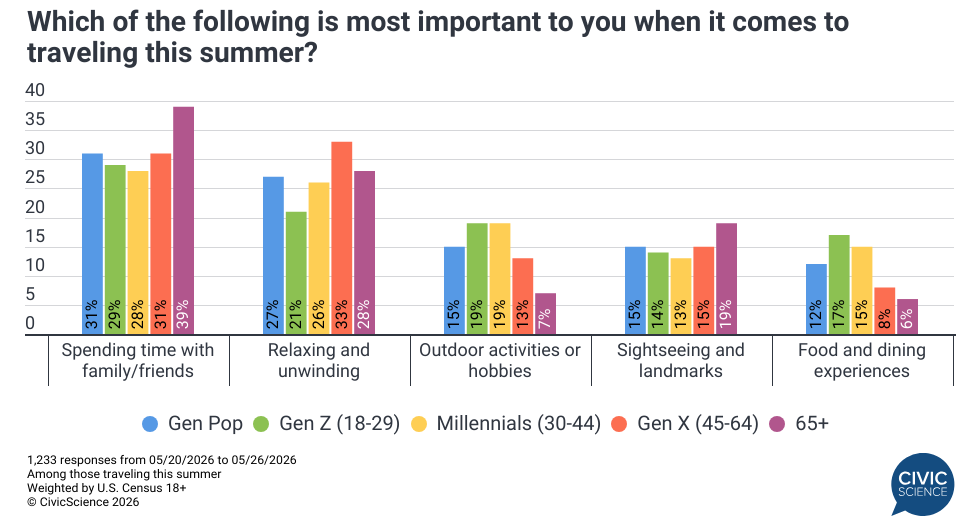
Fuel prices – and the general economy – also have consumers in a wait-and-see mode about summer travel. Four in five U.S. adults say their spring and summer vacation plans have been at least somewhat affected by rising gas prices and inflation, whether by changing their choice of destination, changing their means of getting there, or forcing them to increase their budget. As it stands, 47% of households are locked in on their summer travel plans. Among that group, only a third have everything booked. One in four haven’t booked anything. It means a ton of potential travelers are up for grabs, many looking for deals, or simply waiting/hoping to see costs moderate. It’s a great opportunity for travel marketers to win business.
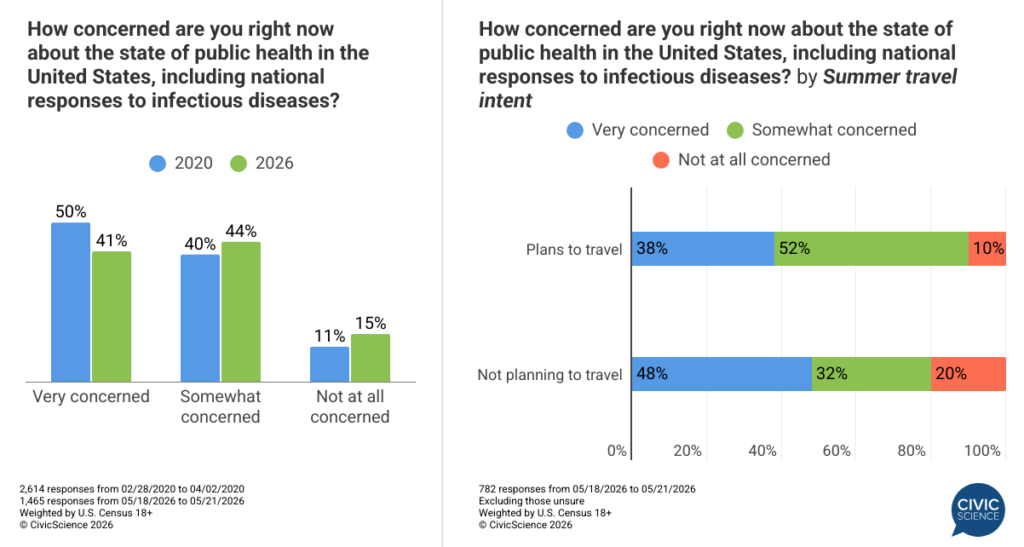
Short-form dramas are changing the way people watch “TV.” So-called “microdramas” – 1 to 3-minute scripted, serialized shows served primarily via TikTok and Instagram – are clearly appealing to Americans’ shrinking attention spans. In our 3 Things to Know this week, we learned that one in four adults – skewing heavily toward younger adults – report watching one or more microdramas regularly. Expect this medium to grow. We also looked at the popularity of home service apps, like Angi (formerly Angie’s List), finding that they have a serious churn problem. Lastly, we found that concerns about infectious diseases in America have subsided since the pandemic, but not as much as you’d think.
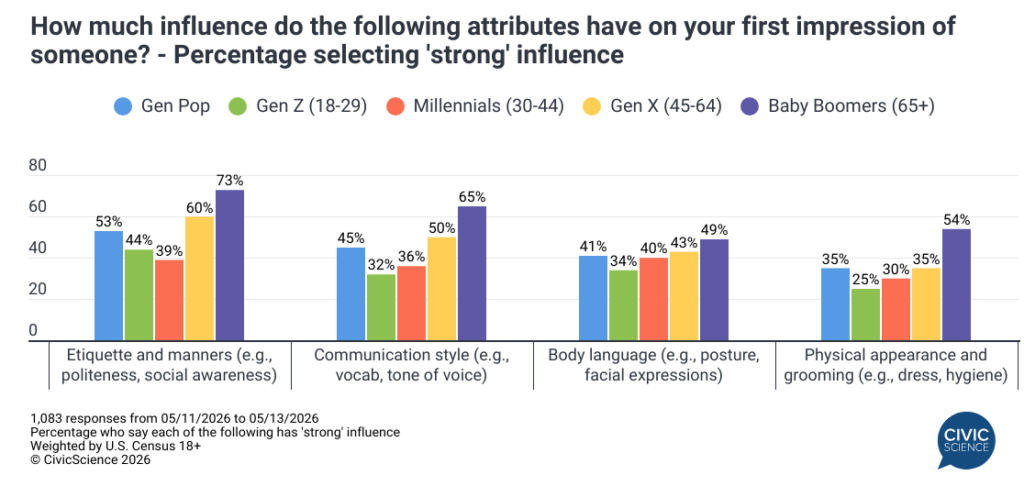
Baby Boomers are judge-y. In last week’s 3 Things to Know (while I was playing hooky for Memorial Day), we examined how different generations form first impressions on the people they meet. Etiquette and manners are the number one factor, overall, though Millennials are more likely to pay attention to body language. Across the board, however, Boomers are the most likely to judge people on everything from their physical style to their tone of voice. We then shared data on how empowered people feel using different forms of technology (smartphones are the most empowering). Finally, we found that consumers are 4X more likely to avoid brands that use AI than they are to prefer them.
More awesomeness from the InsightStore:
- Our latest Economic Sentiment Index came out last week – and it fell again;
- Americans are snacking – in place of meals – more than they ever have in a decade;
- The popularity of cookouts and alcohol rebounded on Memorial Day weekend.
The most popular questions this week:
Do you think social media platforms do enough to prevent scamming?
Do you consider yourself to be an impulse shopper?
Do you interact regularly with your neighbors?
How often do you perform random acts of kindness for others?
Do you typically tune into or tune out of other people’s conversations?
Answer Key: Not even close; Definitely not; At home, not so much. At our cabin, constantly; Every chance I get; Tune in – I can’t help it.
Hoping you’re well.
JD