The day I sat down to write the very first of these emails, nobody had any idea how much the world was about to change.
It was a weekend just like this one, a few days before a pivotal election, when most signs pointed to an unsurprising outcome. It’s been nothing but surprises ever since.
Through 478 installments, I’ve written over 490,000 words (roughly the equivalent of five novels). No topic has appeared more often (529 times) than “COVID,” a word that wasn’t even in our vernacular in 2016. The next most common is “AI,” with nearly all of it occurring in the last three years. “Inflation” and “election” came in third and fourth.
Rounding out the top five was “Tara,” who I’ve mentioned 168 times. I was relieved she ranked above “dogs” and “Steelers” — partly explaining why our marriage survived through all of it. I was less thrilled to learn that “Taylor Swift” cracked the top 10, but it’s a testament to her cultural impact over the past decade. “Donald Trump” did not, because I don’t need the blowback.
Perhaps nothing would have been less believable to me on Halloween of 2016 than if you told me I’d still be writing this thing 10 years later. 46 people were on the first distribution. Before I knew it, we crossed 10,000. These emails have been read over a million times.
In the early days, the intro was only a couple lines long. After this one essentially put the whole thing on the map, the prologue grew to over 450 words on average. It was months later until someone had the idea of listing our most popular poll questions. Now they’re — by far — the most clicked-on links every week.
Meanwhile, I’ve made countless new pen pals (and a few enemies), who all watched my kids grow up and leave the house, my company evolve and expand, and my impeccable hair get even more impeccable. It has been measurably good for business.
For a trip down memory lane, here’s a handful of the most read, notable, or otherwise personal favorites:
- The story of how Tara and I met
- My dad bought me a “sh*t-head” hat
- Why you should never tell anyone if you don’t like Neil Young
- The trials and tribulations of the last name Dick
- When our daughter told a racist joke in a Mexican restaurant
- An even more embarrassing story at a Mexican restaurant
- The heartbreaking event that changed our family forever (trigger warning)
- When I ripped my pants on a large conference stage (photo evidence)
- When I dressed as a princess at the Ren Faire (photo evidence)
- Sometimes everybody’s feelings are valid
I owe huge debts of gratitude to Ivan Martinez at UnitedHealthcare, for inspiring me to start (and name) it; to Bob Lefsetz, whose plug many years ago doubled the readership overnight (including more than a few famous music artists); to my family, who tolerate me making a spectacle out of them; to our board and investors, who allow me to be candid and controversial, even when there might be business reasons not to; to our brilliant team, who produce all the research I take credit for.
And, of course, endless thanks to all of you who still share your Saturday mornings with me, even after all these years.
I am beyond blessed.
Here’s what we’re seeing:
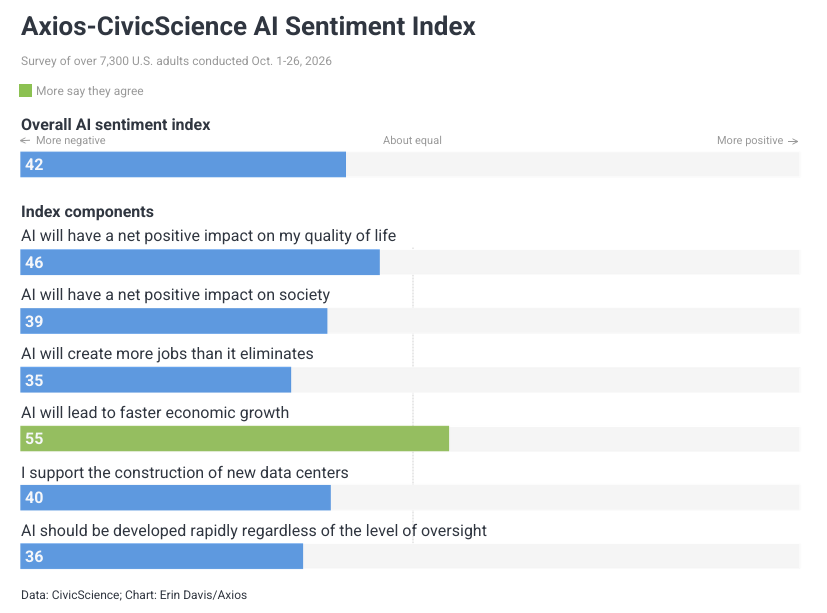
Americans are still sour on AI — especially its impact on jobs. We’re very excited to announce this week’s official launch of the Axios-CivicScience AI Sentiment Index, a new monthly tracking report we will be publishing with the highly respected folks at Axios. The first report paints a bleak view of AI’s impact on jobs, society, and our quality of life, while a majority of respondents believe it will continue to help grow the overall economy. Keep an eye out later today for a deeper report on Americans’ sentiment toward data centers, which have become a political lightning rod heading into Tuesday’s election. If you aren’t signed up for Axios’s AI+ newsletter, you should do that here.
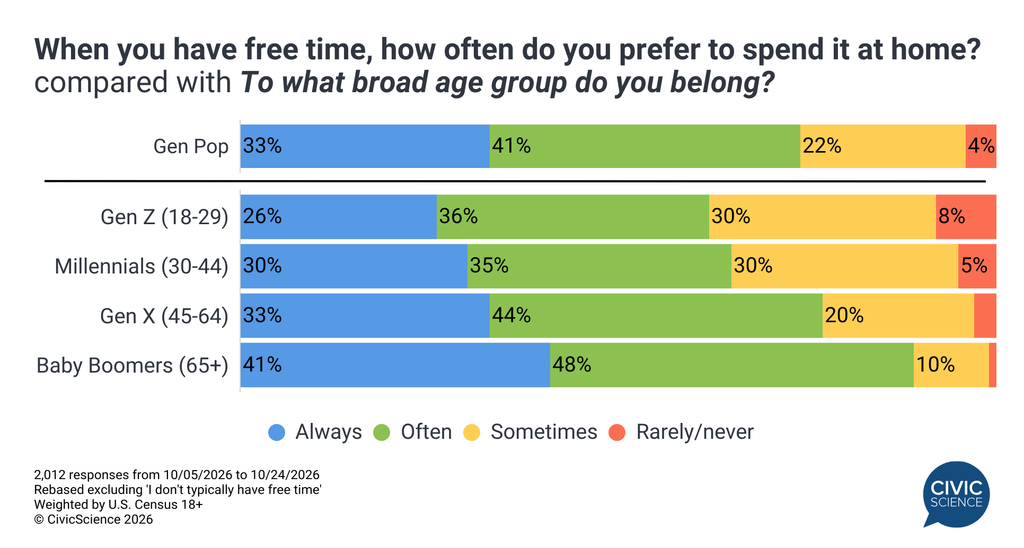
We’ve become a nation of homebodies. Blame our TVs and devices, tribalism, costs, or simply the rising stresses of everyday life, but Americans overwhelmingly prefer to spend their spare time in the comfort of home (33% say ‘always,’ and 41% say ‘often’). Naturally, the numbers vary by age, but even a majority of Gen Z would rather chill at home, at least most of the time. The number one spare-time activity — by far — is watching TV and movies, followed by pursuing a hobby at home. Going out with friends or family is a distant third. We also looked at how people make their homes cozier. Essentially, the more stressed you are, the more likely you are to spend your money on comfy clothes.
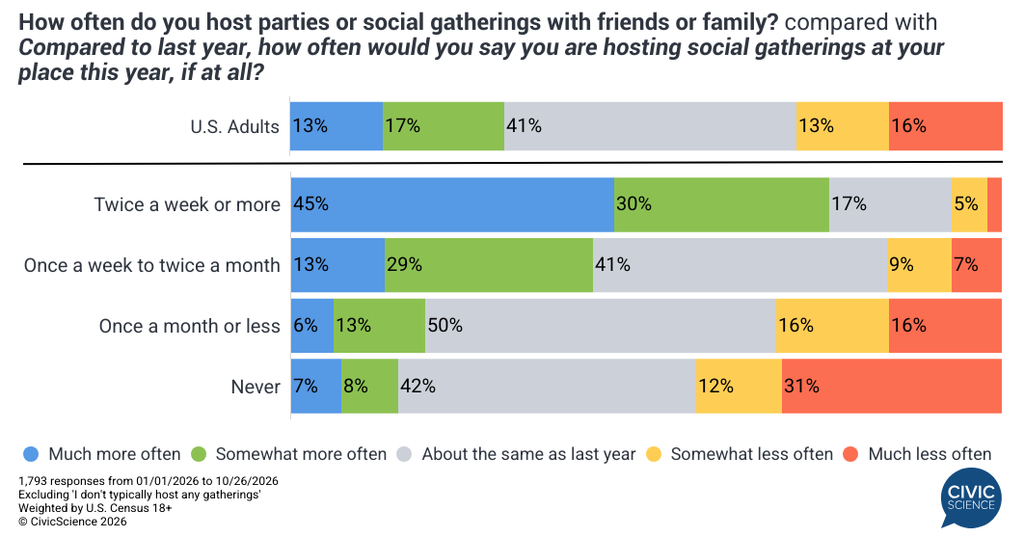
Those hombodies are hosting more parties at least. With the holiday party season fast-approaching, we learned that 60% of U.S. adults entertain guests in their homes at least occasionally throughout the year. Over 1 in 4 host at least a couple times a month — and those frequent entertainers are doing it ‘much more’ often than they did a year ago. While holiday gatherings and milestone parties are most common among those super-hosts, Gen Zers overindex in hosting game nights and sports-centered hangs. If you’re in the retail industry, you should target the hell out of these people — they spend more money than average on everything from food and booze to electronics and furniture.
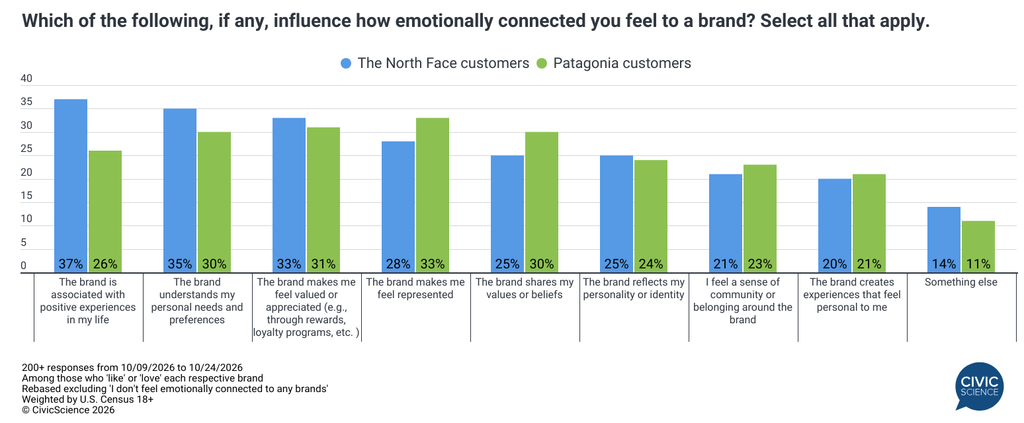
But people who use AI for shopping are among the most valuable consumers you can reach. If you missed our Agentic Retail Webinar this week, shame on you. Among the highlights were stats we shared on the profile of AI-enabled shoppers — they’ll spend a lot more on holiday gifts this year than average consumers. We also shared that ChatGPT dominates among the tools AI shoppers use for product research and discovery, more than doubling the next most popular tool (Gemini). But the underlying numbers are more nuanced, with differences across demographics, retail and services categories, and stage of the shopping journey. That covers about 5% of what we presented. Since I’m feeling nostalgic today, if you want to watch it, let me know, and I’ll send you the recording.
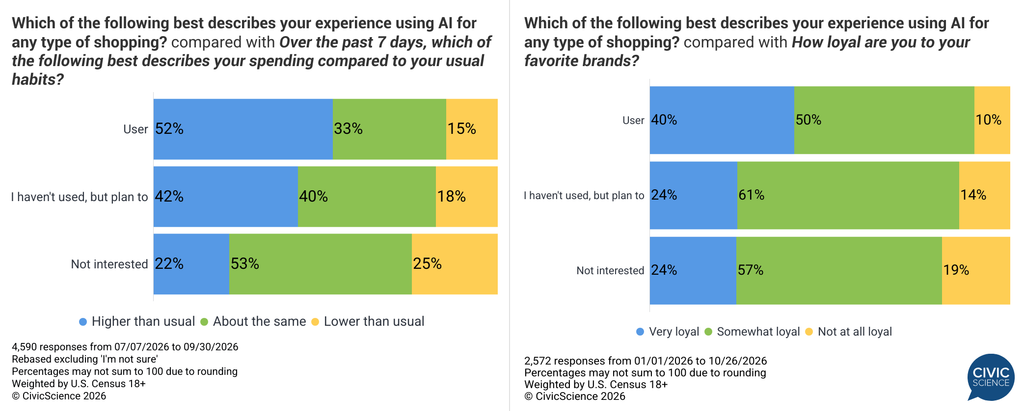
Gen Xers believe in ghosts. In our 3 Things to Know this week, we used Halloween as an excuse to study Americans’ belief in the paranormal, finding that a majority of adults believe in at least one supernatural entity. In a rare instance, I depart fully from my Gen X brethren on this one. We also learned that people who have leftover money in their Flexible Spending Account (healthcare) are most likely to use their dollars for vision and dental care. Lastly, we looked at the rising popularity of anime and K-Pop, evidenced by the 28% increase in users of Crunchyroll this year alone.
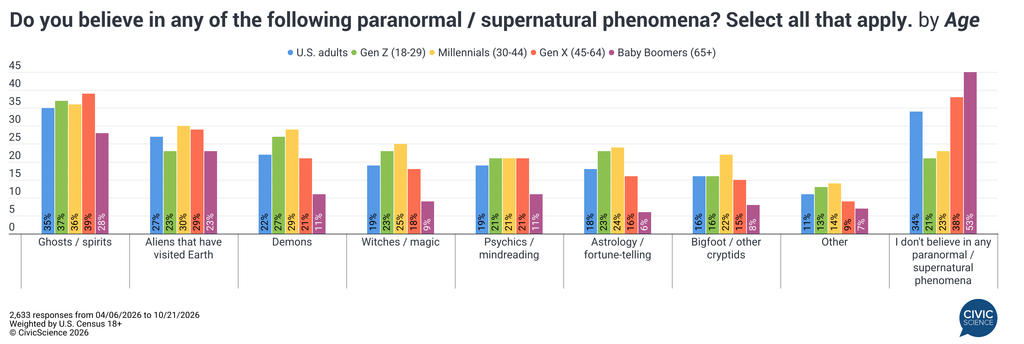
Patagonia and The North Face have quite the head-to-head competition. With ski season and scraping-ice-off-your-effing-windshield season fast approaching, we examined the popularity of two of America’s biggest winter outerwear brands. While The North Face has the edge in overall brand favorability, it’s not a runaway, with Patagonia taking the lead among outdoor sports enthusiasts. Patagonia customers are also more optimistic about their financial outlook, even as they expect to take on more debt in the coming months. The two customer groups also shop differently, from their use of AI to their emphasis on brand values.
The most popular questions this week:
Have you scaled back your dining out habits in response to recent inflation?
Do you wear sunscreen regularly?
How often do you go out for hamburgers?
Do you think the mindset of “saying yes” to any opportunity can propel you to great success?
Do you think department stores will ever make a full comeback?
Answer Key: No; Less than I should; More than I should; Absolutely; Not a chance in hell.
Hoping you’re well.
JD