We don’t want to be divided.
Our collective condition over the past decade might lead you to believe our current socio-political state is somehow innate or desired, that we’re happier in smaller homogeneous groups (or even alone). Why be subjected to the discomfort of being around people who look, talk, or think differently, when technology and social media have made it so easy to curate our surroundings? It makes you wonder if that’s just the way we are.
Then things like the World Cup happen.
Even if you haven’t watched games every night like our family has or if the second monitor on your desk wasn’t muted and tuned to afternoon matches while you feigned attention on Zoom meetings, you likely haven’t escaped the buzz. You’ve probably seen the videos of massive watch parties all over the world or the social media escapades of foreign visitors marveling at the size of our grocery stores and the free salsa and chips at our restaurants.
The U.S.-Belgium debacle on Monday had better U.S. ratings than last year’s NFL playoffs, which is unheard of. For those (like me) assuming interest would immediately wane after our home team fizzled out, Google recorded its highest usage and search volume ever after Argentina came back to beat Egypt on Tuesday. Ever!
It’s the most connected we’ve been – nationally or globally – since my kids were born. Everyone of all shapes and sizes seems to love it. And it’s awesome.
Bigger picture, the World Cup has been a reminder that tribalism and protectionism are not our natural dispositions. They’re constructs manufactured by those who benefit by dividing us, by pitting us against people we only know via the caricatures we’re fed, by convincing us our lives would be better if it weren’t for “those people.” It’s all a lie. Our weaknesses and fears don’t define us – even though we all have them. They’re just the easiest things to manipulate.
But perhaps people are finally snapping out of it. This month, the percentage of Americans who identify as political Independents reached heights we’ve never seen in our data. Ironically, in this case, “independence” doesn’t mean we don’t want to be part of a group. It merely means we want to be in the largest group, not one of the two at perpetual war with each other.
Undoubtedly, the current vibes will wane as the tournament comes to an end, and the approaching midterms push us all back into our corners. Hopefully some of it lingers. Hopefully people will remember how much they enjoyed being connected again.
Hopefully the bottom is behind us.
Here’s what we’re seeing:
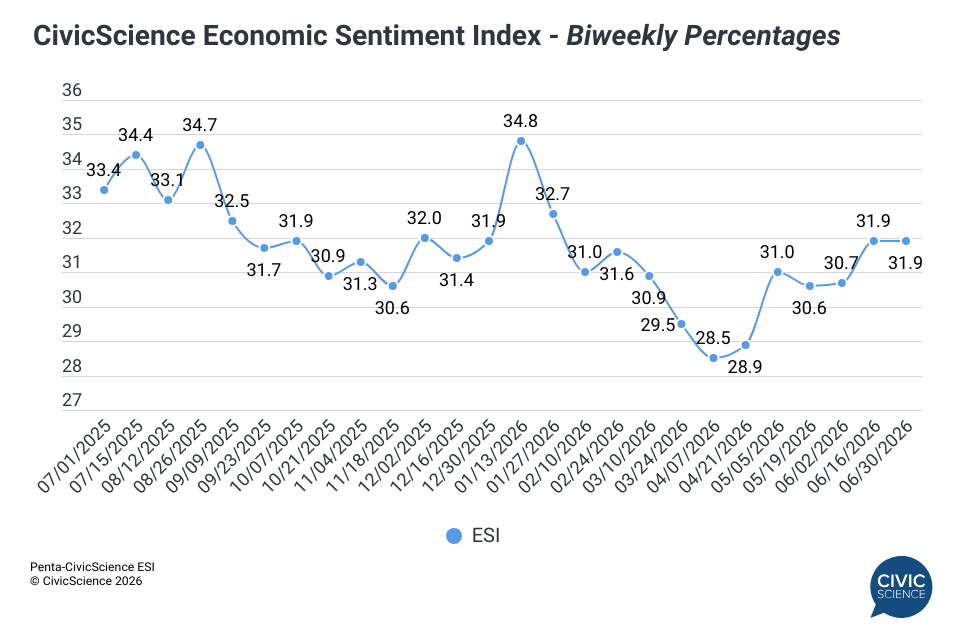
Consumer confidence remained steadily subpar at the end of June. Since I shirked my writing responsibilities over the holiday weekend, you missed our latest Economic Sentiment Index (published July 1), although you didn’t miss much. The number was identical, down to the decimal point, to the last reading in mid-June. Even the individual metrics were uncannily consistent, with four of the five indicators moving less than a full point. Overall outlook for the U.S. economy was the only outlier, sliding 1.2 points from the prior release.
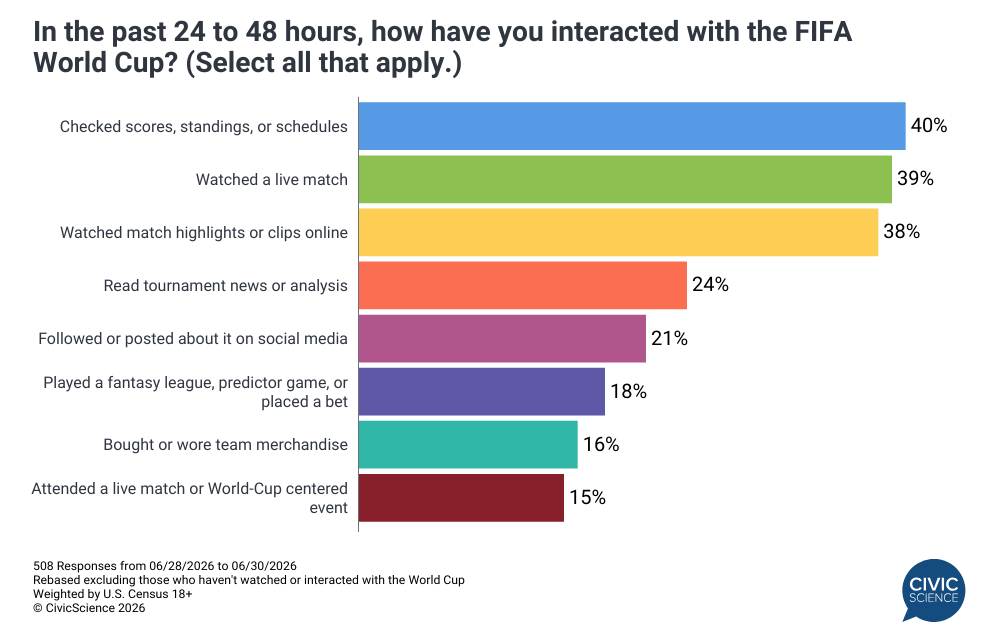
Lots of people have been following the World Cup. Apropos of today’s opening missive, we published a snapshot of World Cup fan engagement last week, finding a notable increase in the number of Americans who were tuning into games compared to the Qatar tournament in 2022. Over a two-day period, just under half of U.S. adults interacted with WC content in some way, from checking scores to watching highlights to placing bets. While we should expect that engagement to dip after the U.S. vomited on itself in the Round of 16, it won’t fall far. Only 25% of WC followers said the USMNT’s performance had a lot of influence over their decision to follow the tourney.
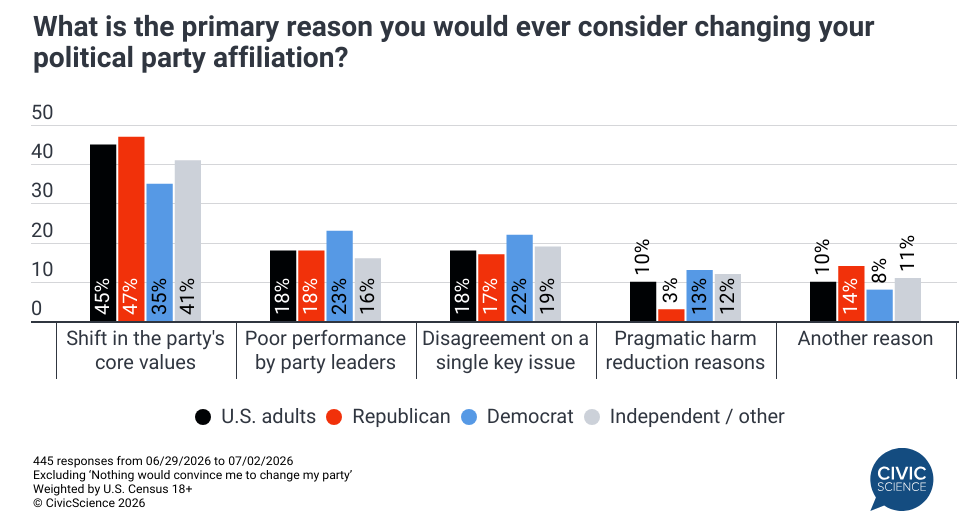
One in four voting-aged adults is reconsidering their party affiliation. Also on theme with today’s intro, our 3 Things to Know this week included new data on U.S. voters who are thinking about breaking from their current political party of choice. Republicans are slightly more likely than Dems to have second thoughts and for different reasons (see below). Meanwhile, Gen Z is still trying to figure out where they belong. Nearly half have either recently changed parties or are considering it. We also looked at the growing share of Americans who are unhappy with their credit scores and the state of budget-keeping across different generations – finding that Millennials are the most likely to monitor their P&Ls on a weekly basis.
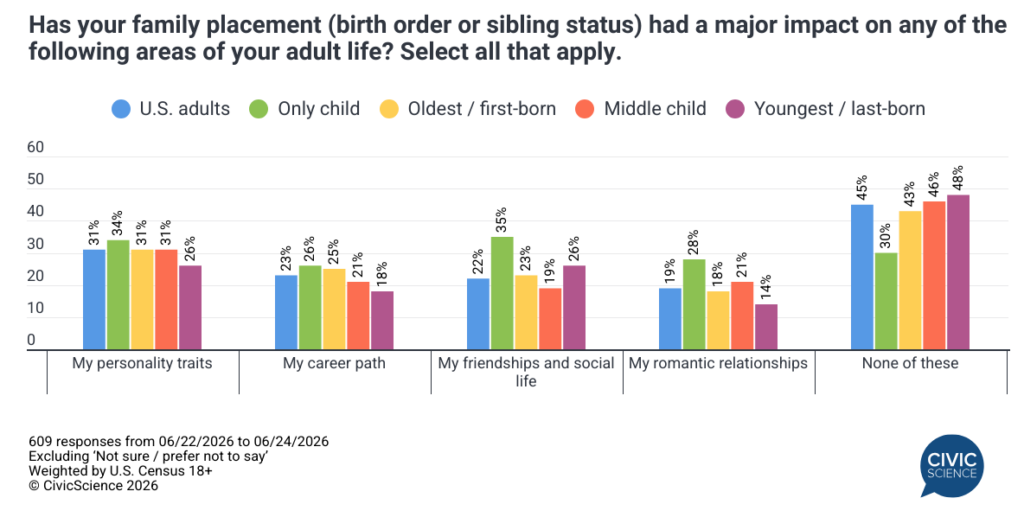
Birth order and sibling status are significant contributors to our path in life. While the ancient days of birth order formally deciding our fortunes are thankfully behind us, in last week’s 3 Things to Know, we learned that it still very much matters in practice. Over half of U.S. adults believe their birth order and/or sibling status had a material impact on everything from their career path to their personality traits and social lives. The effects were highest, by far, among only children. We also found that a growing percentage of Americans rely on financial content creators (especially on YouTube) to guide their personal finance decisions. Lastly, we looked at disparate levels of consumer confidence when it comes to using QR codes across different industry applications.
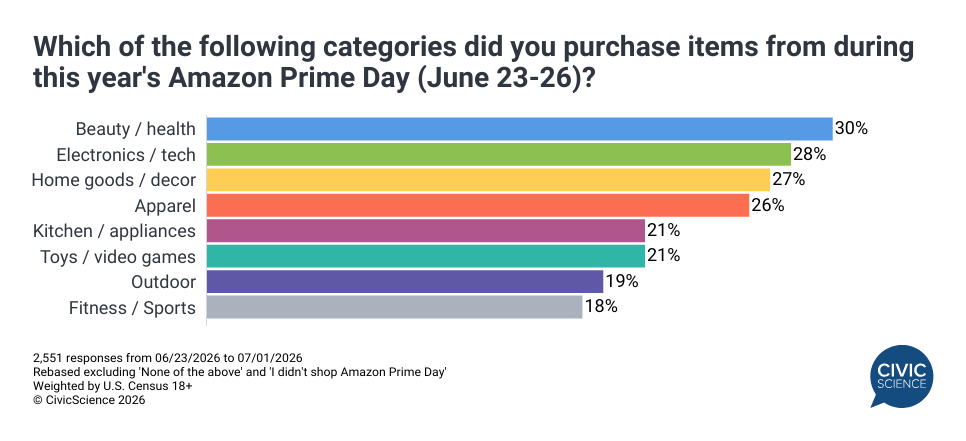
Amazon Prime Day was a banger this year, just as we predicted. Amazon’s summer retail event tallied record sales last week (thanks in part to Tara and our kids), as U.S. shoppers increasingly looked for deals. The largest share of shoppers – particularly those aged 45 and older – used the event to find discounts on everyday items and essentials. The under-45 crowd was slightly more likely to shop for fun. Still others took the opportunity to get a head start on their back-to-school or winter holiday shopping. Notably, for the first time, health and beauty products surpassed electronics as the number one category Prime shoppers reported purchasing from. The “beauty as self-care” trend still shows no signs of slowing.
More awesomeness from the InsightStore™:
- We partnered with the Sports Business Journal on a comprehensive look at sports fans leading up to America 250 celebrations and it’s chock full of amazing data for sports nerds, my favorite of which was the finding that my Pittsburgh Steelers trail only the Yankees and Cowboys as the nation’s most beloved franchise. If you care about sports and especially sports marketing, this is a must-read;
- Our nationwide Emotion Well-being Index improved in June for the 2nd consecutive month, and I’m sure the World Cup had something to do with it;
- As inflation fears climb among Americans aged 55+ (i.e., the ones with all the money), they’re getting super-savvy in the financial trade-offs they’re making;
- On the heels of Prime Day, a growing number of U.S. adults have their sights set on Christmas in July events.
The most popular questions this week:
How concerned are you, if at all, about rural hospitals closing in the US?
Do you think the benefits of a private school education outweigh the costs?
How much do you deviate from your normal diet during a holiday?
Have you ever dropped anything valuable in a public toilet?
Answer Key: Very, very; We decided they weren’t, but to each their own; Wildly; Very little unfortunately; No, but I think about it a lot and I know it’s only a matter of time (my phone).
Hoping you’re well.
JD